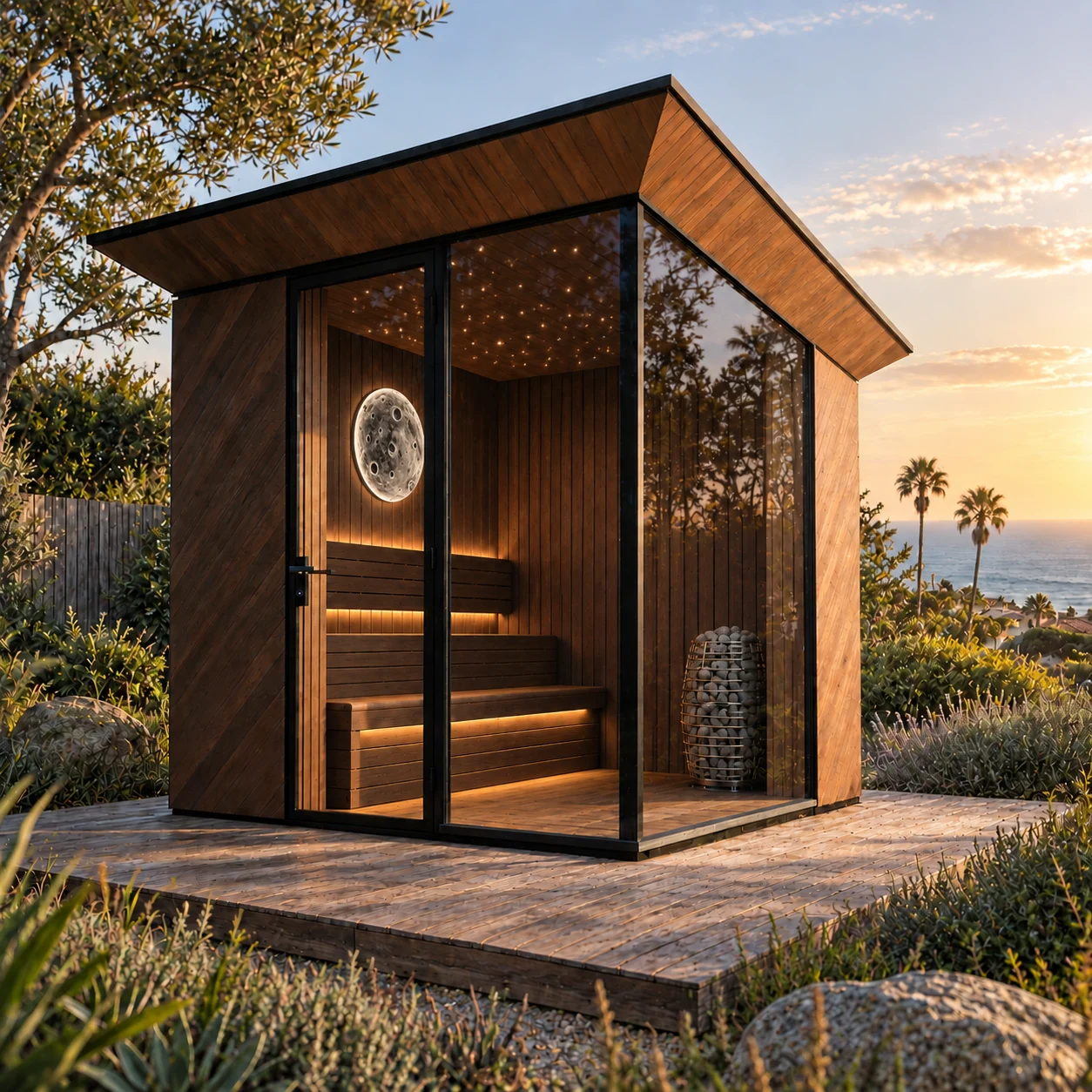
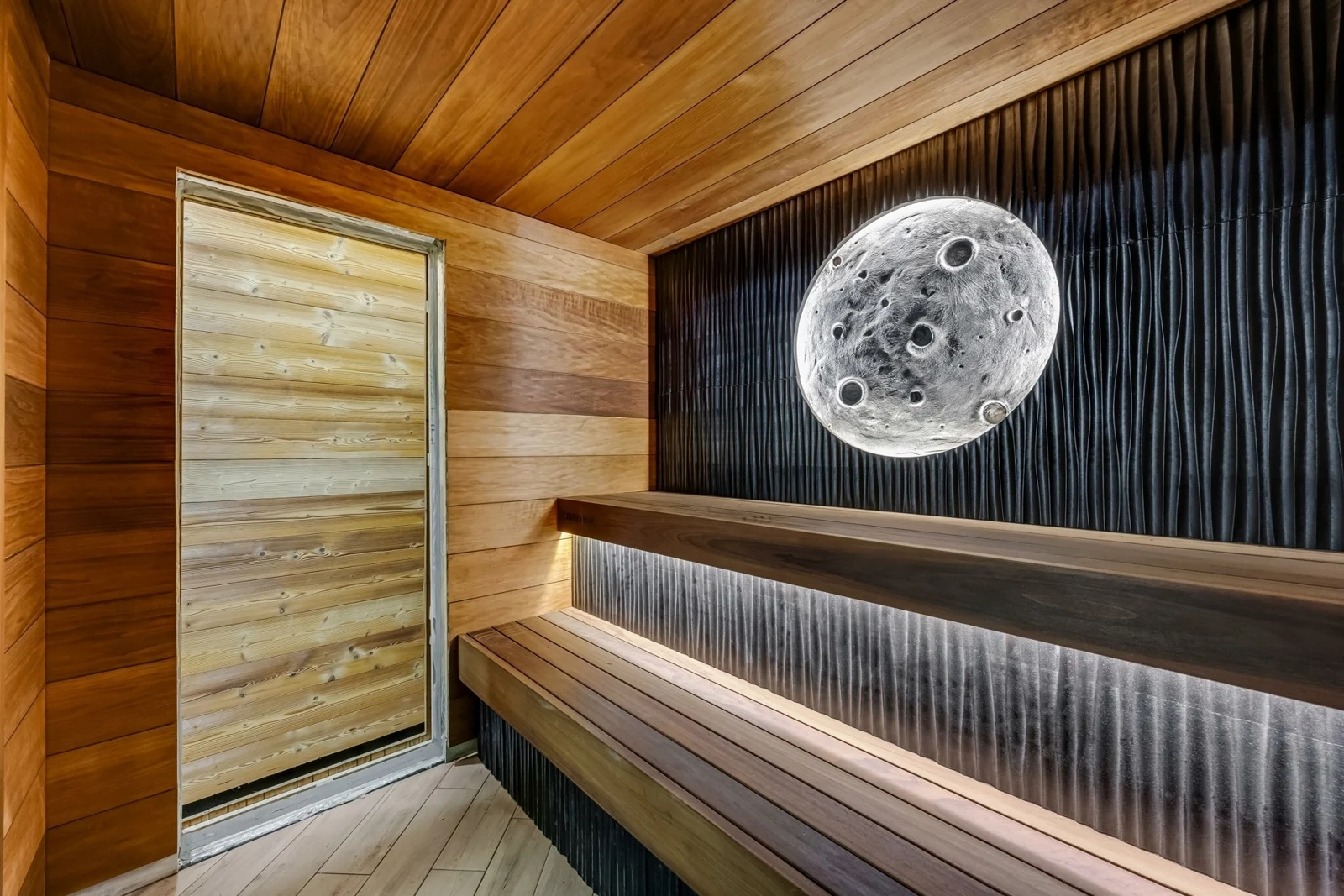
Finnish sauna tradition, made in Estonia
“Finnish sauna” describes the bathing tradition in this guide, not ecosh’s country of manufacture. Our modular saunas are built in Estonia and use a traditional heater-and-stone setup. The Finnish word for the steam from water on hot sauna stones is löyly; in Estonian, it is leil.
ecosh’s current modular sauna packages use electric HUUM heaters. A wood-fired sauna can also be traditional, but it is not the standard ecosh package described here. For our actual layouts, prices and included equipment, compare ecosh outdoor saunas.
Traditional sauna is defined by the experience
A search for a traditional sauna for sale can lead to products that look similar from the outside but feel completely different once heated. Authenticity is not created by adding pale wood, Scandinavian styling or the word Finnish to a product page. It comes from how the room holds heat, how air moves, how the benches are positioned and how water meets hot stones to create löyly.
In Finland and Estonia, sauna is not merely a wellness appliance. It is a place for cleansing, quiet, conversation and reconnection. ecosh Sauna carries that cultural understanding into a modern California setting: handcrafted architecture, natural materials and heat designed to be experienced in rounds rather than endured on a timer.
What makes a sauna traditionally Finnish?
A traditional Finnish sauna heats both the room and a substantial mass of stones. The bather throws water onto those stones, briefly increasing humidity and changing how the heat is felt. This moment is called löyly. It gives the bather control over the rhythm and intensity of the session.
The experience usually includes repeated cycles: warm in the sauna, step out to cool, rest, drink water and return when ready. There is no need to chase a single maximum temperature or stay inside for a fixed competitive interval. A good sauna invites people to listen to the body and to the room.
Traditional sauna vs. infrared sauna
An infrared cabin uses radiant emitters to warm the body more directly, generally while the surrounding air remains cooler. A traditional sauna uses a heater and stones to warm the room, then introduces steam through water on the stones. This creates a more dynamic combination of radiant heat, hot air and humidity.
The decision is personal, but buyers searching for a Finnish sauna for sale are usually looking for the ritual of löyly, a social room and a deeper connection to Nordic sauna culture. That requires a traditional heater, real stones and room design that supports the heat.
The room matters as much as the heater
A premium heater cannot correct every design problem. The sauna room must allow warm air to gather around the bathers without leaving feet in a cold zone. Ceiling height, bench levels, glass area, insulation and ventilation affect both comfort and energy use. The design should also allow the room to dry between sessions.
When evaluating a traditional dry sauna for sale, ask for a section drawing rather than relying only on exterior renderings. Look at the relationship among the ceiling, upper bench, lower bench and top of the stone mass. Ask how supply and exhaust air are handled for the proposed heater and room.

Choosing the heater: electric or wood-fired
Both electric and wood-fired heaters can create authentic sauna heat when correctly sized and installed. Electric heat is easy to control and can suit regular residential use. Wood fire brings sound, flame and a slower preparation ritual, but it also requires a compatible chimney system, fuel handling, greater operational attention and local approval.
Stone capacity deserves attention. The stones store heat and provide the surface that turns water into löyly. More stone is not automatically better in every room, but an exposed, correctly arranged stone mass is central to the traditional experience. Follow the heater manufacturer’s specifications for stone type, loading, clearances and controls.
Wood should be selected by role
A sauna can use different woods for different tasks. Exterior cladding must manage weather. Interior boards must remain stable through repeated heat and moisture cycles. Bench wood should feel smooth against skin and avoid becoming unpleasantly hot. ecosh's material selection includes thermally modified woods for specific surfaces and Abachi as a bench-material option. The selected interior determines the final material schedule; ask which wood, treatment and finish is supplied for each surface.
Thermally modified wood is produced through controlled heat treatment. The International ThermoWood Association highlights dimensional stability, durability, a non-resinous character and suitability for demanding weather applications. These qualities make it valuable for an architectural outdoor sauna, particularly when product selection and detailing match the intended use.
A sauna is also the space around it
A traditional outdoor sauna for sale should not be evaluated as an isolated box. Consider the cooling area, privacy, evening lighting, robe hooks, drainage, a safe walking surface and a place to sit. If you plan to add a cold plunge, position it so the transition feels natural without making circulation slippery or crowded.
This is where Nordic sauna design becomes a form of hospitality. The experience begins before the door closes and continues after the last round. A thoughtful rest area and an after-sauna hydration ritual can be as memorable as the heat itself.
How to recognize a serious sauna seller
- They can explain room geometry, ventilation and heater sizing — not only exterior styling.
- They identify the wood species and treatment used for the exterior, interior and benches.
- They provide clear boundaries between product supply, site work, electrical work and installation.
- They ask about location, climate, access, intended group size and normal use.
- They make it possible to experience the sauna or inspect a completed installation.
- They are careful about permits and direct you to locally licensed professionals where required.
Traditional Nordic sauna, handcrafted in Estonia
ecosh was born in Estonia, where sauna belongs naturally beside forests, cold water, changing seasons and community. Our approach is to bring that living culture to California without turning it into a costume. The architecture is modern and refined, but the principles remain traditional: good heat, real stones, natural wood and time to move between warmth, cooling and rest.
Ask about a Carlsbad viewing or a video call to examine the layout and materials. We confirm the available demo product and appointment before you visit. Share your property location and preferred layout when you inquire.
Do not buy a traditional sauna from photographs alone. Whenever possible, experience the heat. A private viewing reveals what a specification sheet cannot: how the room feels, how the löyly moves and whether the sauna creates the calm, generous atmosphere you want to bring home.
Frequently asked questions
What is a traditional Finnish sauna?
It is a heated room with a sauna heater and stones. Water is applied to the hot stones to create löyly, changing the humidity and felt intensity of the heat. The experience normally unfolds in repeated heating and cooling rounds.
Is a traditional sauna the same as a dry sauna?
The term dry sauna is often used to distinguish traditional sauna from a steam room, but a Finnish sauna is not always dry. Bathers add water to the stones, producing temporary waves of humidity.
Can a traditional sauna use an electric heater?
Yes. Traditional sauna describes the heat and bathing method, not only the fuel. A correctly sized electric heater with sauna stones can create authentic löyly.
Where can I find a traditional sauna for sale near me?
ecosh Sauna is developing its California presence and a demo sauna for private viewings. Submit your city and project details to confirm current service and viewing availability.