
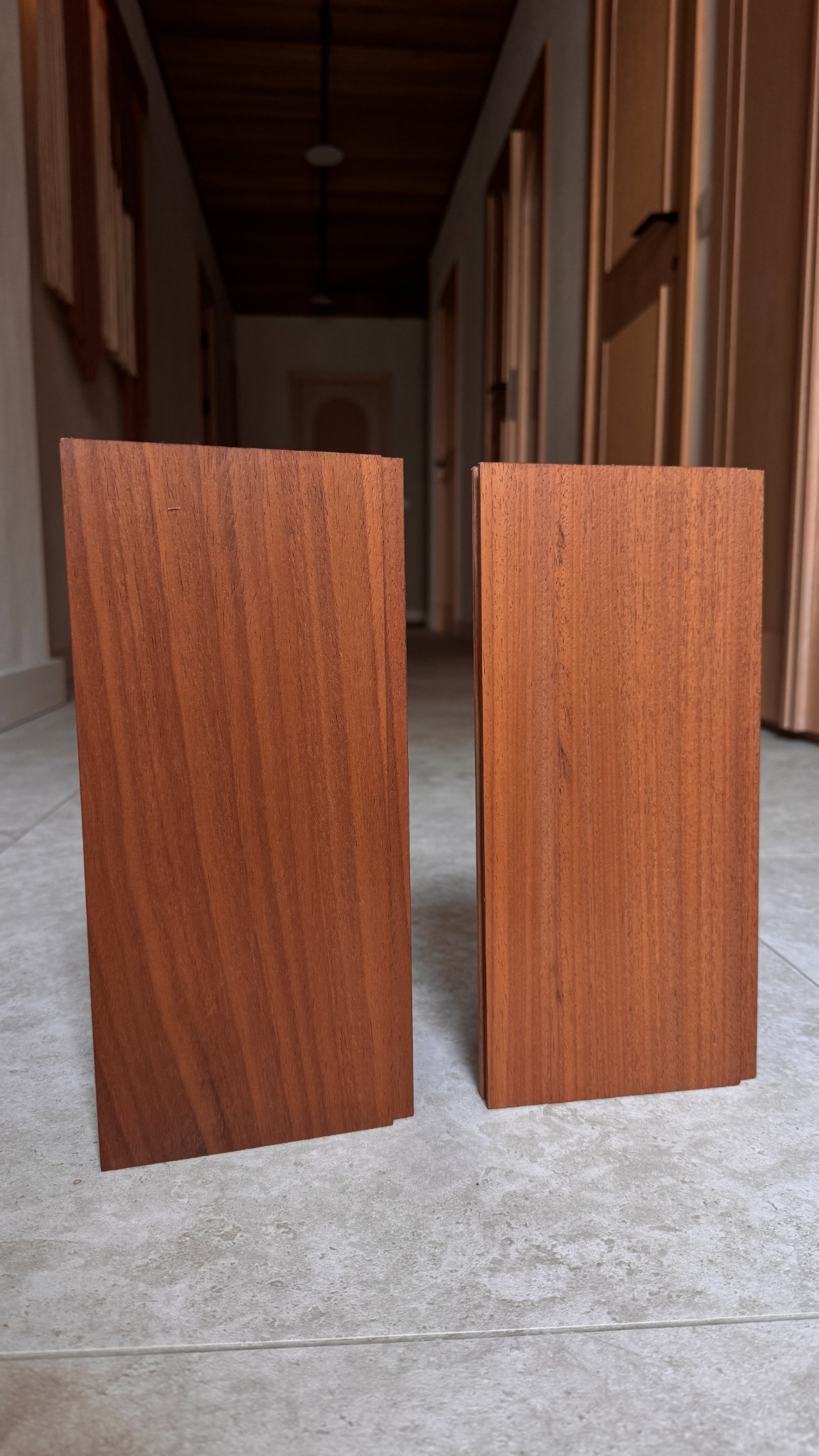
Choosing bench wood is easier when you put three samples next to each other. Abachi and aspen can both look pale in a photograph; alder usually brings a warmer tone. Once you compare the actual boards, the grain, edge shape and finish become just as important as the species.
The short answer: consider Abachi for a lightweight, pale bench surface; aspen for a light interior with coordinated sauna profiles; and alder when you prefer a warmer natural colour. None is the universal winner. Choose a bench-grade product with the right dimensions, support and finish for your design.
Abachi, aspen and alder at a glance
| Decision | Abachi | Aspen | Alder |
|---|---|---|---|
| Natural appearance | Pale cream to yellowish; examine the individual sample | Generally light with a restrained appearance | Typically warmer, reddish tones |
| Why shortlist it? | Low weight and established use in sauna seating | A light palette and a choice of sauna boards and elements | A warmer palette without needing to choose a dark finish |
| What to verify | Natural or thermally modified, bench profile and sourcing | Species, grade, treatment and matching profiles | Grade, treatment and colour variation across the order |
| What all three need | Smooth surfaces, suitable edges, correct support, drying and a compatible care routine | ||
This is a selection guide, not a laboratory ranking. We have not run a controlled head-to-head temperature or durability test of these three woods.
When Abachi belongs on your shortlist
Abachi is also traded as ayous or obeche. Suppliers value its low weight and relatively low thermal conductivity for sauna benches. Natural boards are typically pale, while thermally modified products have a different appearance. Ask for the exact treatment rather than assuming that a dark board has simply been oiled.
For an ecosh project, Abachi is worth considering when the bench and backrest are central to the room's design. Our Abachi material section shows actual samples, available profile dimensions and decorative panel options. A decorative wall panel and a seating board are different products even when the wood species is identical.
For a deeper explanation of the material, see our Abachi guide to comfort, finishes and care. Here, the useful question is whether you prefer it to the other two options in your own room.
When aspen makes sense
Aspen is a familiar choice for light sauna interiors. Manufacturers such as Thermory offer both natural and thermally modified aspen in sauna profiles. That can be helpful if you want to coordinate the seating with other parts of the interior.
Look beyond the word “aspen” on a quote. A wall profile with a tongue-and-groove joint is not a substitute for a bench board merely because the width looks right. Ask for the finished seating dimensions, edge treatment and installation guidance. If matching boards will be ordered later, discuss colour variation and future availability now.
When alder is the better visual choice
Natural alder generally has a warmer, reddish appearance than natural aspen. It is used in sauna interiors and is available in purpose-made sauna products. If a pale sample feels too stark against your lighting, alder is worth viewing before you reach for a coloured coating.
Place the sample beside the actual wall material under the lighting you plan to use. Warm lighting can change how all three woods look. Phone photographs and small online swatches are poor substitutes for comparing the surfaces together.
Which wood feels coolest?
All sauna wood warms up. A comfortable contact surface depends on more than its species: surface temperature, moisture, finish, knots and the way the bench is built all matter. Low thermal conductivity is useful, but it does not make a board burn-proof or guarantee a fixed surface temperature.
Choose smooth seating surfaces and properly finished edges. Check for damaged grain, rough areas and exposed metal where skin may touch. A seat towel is part of a sensible everyday routine. We would not choose a whole bench from a claim that one species “never gets hot”.
Compare complete bench specifications
Ask each supplier to quote the same finished bench layout. Otherwise a price comparison may actually be comparing different board widths, support requirements or amounts of usable timber.
- Board dimensions: finished thickness, width and usable length.
- Support: the proposed span and support arrangement for that exact product.
- Grade: acceptable knots, defects and surface quality.
- Treatment: natural or thermally modified material, plus any applied finish.
- Quantity: the cutting plan, offcuts and any spare boards.
- Supply: lead time, delivery cost and documented origin or certification where required.
There is no reliable universal price order between Abachi, aspen and alder. Your location, grade, profile, lengths and freight can change the result. Compare delivered quotations rather than unrelated prices per board.
Choose the finish for the surface
Approve a sample of the exact wood and finish together. A treatment can deepen the tone enough to change your preferred species. Use only a product whose instructions cover the intended sauna surface, and follow its application and drying requirements.
ecosh's sample presentation includes clear wax and an oil option. Confirm the proposed finish separately for walls and seating. Buying a darker finish does not turn natural wood into thermally modified timber.
A practical way to decide
Start with your preferred colour, then eliminate products that do not have the right profile or installation information. Compare the remaining samples by touch and appearance. Finally, compare the full delivered order. This sequence avoids choosing a beautiful board that creates problems when you build the bench.
For an ecosh material inquiry, send a bench sketch, approximate dimensions, preferred finish and delivery ZIP code. Ask about Abachi profiles and availability. Aspen and alder are discussed here as comparison materials; this article is not a claim that every species or profile is stocked by ecosh.
Common buying questions
Can I mix species in one sauna?
Yes, provided each product is suitable for its location. Compare the samples together and confirm the construction and finish for each surface.
Is thermally modified wood always the better bench choice?
Not automatically. Treatment changes the material and its appearance. Check the exact product's intended use and installation requirements instead of treating “thermo” as a guarantee.
Does a bench board's overall width equal its coverage width?
Not necessarily. Joined cladding can have a smaller coverage width. Bench layouts also involve gaps and support details, so use the appropriate drawing rather than a wall-coverage calculation.