
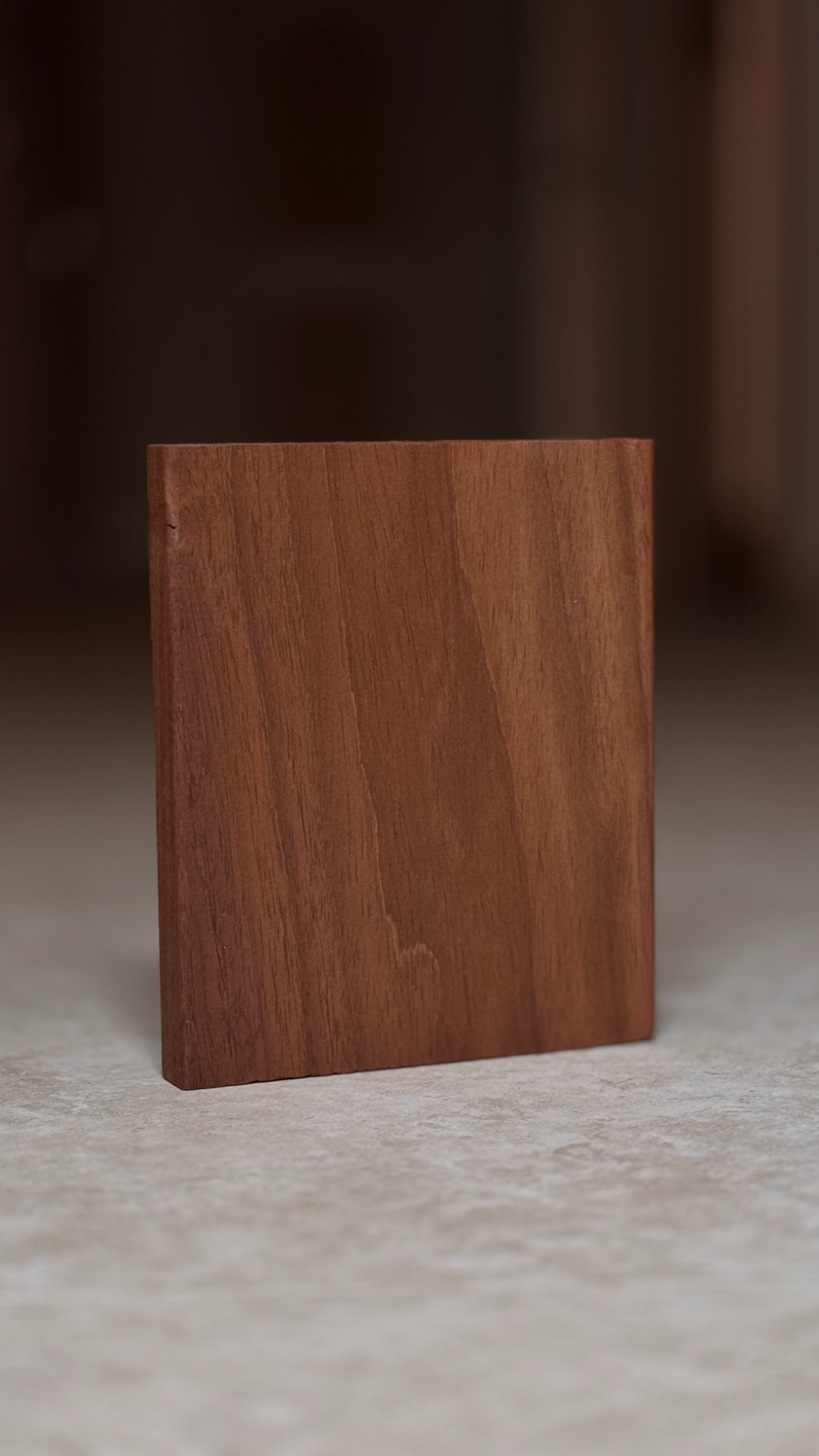
A sauna bench is one of the few parts of a room you judge with bare skin. The timber needs to feel comfortable, have a carefully finished surface and suit repeated heating, cleaning and drying. Abachi is a familiar choice for that job: a lightweight, pale hardwood used for sauna benches and backrests.
It is not the only suitable bench wood, and it does not stay cold in a hot room. This guide explains what makes it useful, where it can work as a decorative material, and what to check before choosing boards or a finish. For material inquiries, visit our Abachi wood selection and quotation section.
What is Abachi wood?
Abachi is also traded as ayous or obeche. These names commonly refer to Triplochiton scleroxylon, an African hardwood. Natural timber is pale, from cream to light straw. “Hardwood” describes its botanical group; it does not mean that every board is heavy or hard to the touch.
When comparing Abachi timber, confirm the species, grade, treatment and intended use. A decorative panel, a bench board and a furniture component may share the same wood name while having different profiles, construction and installation requirements.
Why is Abachi used for sauna benches?
The appeal starts with its low weight and relatively low thermal conductivity. It transfers heat less readily than a highly conductive material such as metal. Combined with a smooth, properly prepared surface, that makes it useful where legs, backs and hands touch the sauna.
Comfort still depends on the finished bench. Rounded edges, suitable board spacing, stable supports and fasteners kept away from skin-contact surfaces matter as much as the species name. Inspect a sample rather than judging quality from a colour swatch.
Its light tone is another reason to choose it. Pale seating can provide contrast against darker walls, make the bench outline easy to see and bring a quieter visual rhythm to a detailed interior.
Does Abachi wood get hot in a sauna?
Yes. Abachi warms up in a heated room. The useful distinction is how heat moves from the material into your skin when you touch it, not whether the wood absorbs any heat at all.
Claims such as “never gets hot” or “cannot burn” go too far. Temperature, exposure, moisture, finish and duration of contact all affect the experience. A seat towel remains useful, and no wood choice removes the need for sensible sauna use or the heater manufacturer's clearances.
Natural Abachi and thermo-Abachi: check which you are buying
Natural Abachi has a pale appearance; thermally modified Abachi is darker. A colour change from an applied finish is not the same thing as thermal modification. Ask which treatment the material has received and what the supplier recommends for the intended surface.
Do not assume that a darker ecosh bench is thermo-Abachi. The material depends on the selected interior. Request the material schedule for that configuration rather than identifying a species from a photograph.
For the wider choice of exterior, wall and bench materials, read our Thermowood vs. cedar guide. That comparison covers the whole sauna; this article focuses on Abachi.
Beyond seating: backrests, trim and decorative panels
Abachi can also be used in backrests, bench fronts and decorative details. Manufacturers offer Abachi wall panels for sauna and other interior applications, showing how the same wood can serve both a practical and a visual purpose.
- Backrests: repeat the bench material on the surface your back touches.
- Bench fronts and edge details: carry the colour through the seating area while keeping removable access where the design needs it.
- Feature panels: use a limited area of texture or pattern to contrast with simpler wall boards.
- Changing-room details: continue the material into a space with different heat and moisture conditions.
These are design possibilities, not confirmation that every Abachi product is suitable for every location. For a hot-room panel, check the complete assembly: timber, adhesive, backing, finish and fastening method. A panel sold for a living room does not automatically belong in a sauna. Decorative wood is not a substitute for a required heater guard or heat shield.
Can you oil, wax or colour Abachi sauna benches?
Yes, when the treatment is intended for sauna benches and compatible with the timber and any previous finish. Choose by the exact product instructions, not simply by the words “natural” or “wood oil” on a label.
| Option | What to consider |
|---|---|
| Uncoated wood | Confirm the bench supplier's care instructions and whether it recommends protection for your use. |
| Sauna-bench paraffin oil | A product specifically intended for benches can help protect against moisture and dirt; it may deepen the wood's colour. |
| Bench-compatible sauna wax | Some products are available clear or tinted. Confirm that benches are an approved use, especially for surfaces touching skin. |
| General paint, varnish or furniture oil | Do not assume suitability. Use only if the manufacturer explicitly approves the intended sauna-bench application. |
For example, Tikkurila lists Supi Laudesuoja paraffin oil for untreated or previously oiled sauna benches. Its Supi Saunavaha is listed for sauna benches as well as certain other interior sauna surfaces and is available in clear and coloured options. These illustrate different treatment approaches; they are not a promise of US availability or the finish supplied on an ecosh sauna.
Try the chosen product on a spare piece from the same timber batch. View it after the specified drying or curing period, under the lighting you plan to use. Follow the product's preparation, application and return-to-use instructions. An attractive dark colour is not proof that the board was thermally modified.
What should you check before ordering bench boards?
Start with the bench drawing and how you intend to sit or lie down. Then discuss:
- The specified species, grade and whether it is natural or thermally modified.
- The finished surface, edge profile and suitability for skin contact.
- Board width, thickness and usable lengths for your layout.
- Required support spacing, fixings and the complete bench construction.
- The approved finish, cleaning method and access for maintenance.
A lightweight board still needs a properly designed support system. Do not use the wood name alone to choose a span or load limit. The ecosh dimensions below are planning references; profile suitability and availability are confirmed with your quotation.
ecosh Abachi samples: hand finishing and CNC patterns
Our own sample photographs show how Abachi grain, surface profile and finish work together. The clear-waxed samples retain the visible grain; oil is an alternative when you prefer a deeper tone. Colour varies with the individual board and lighting.
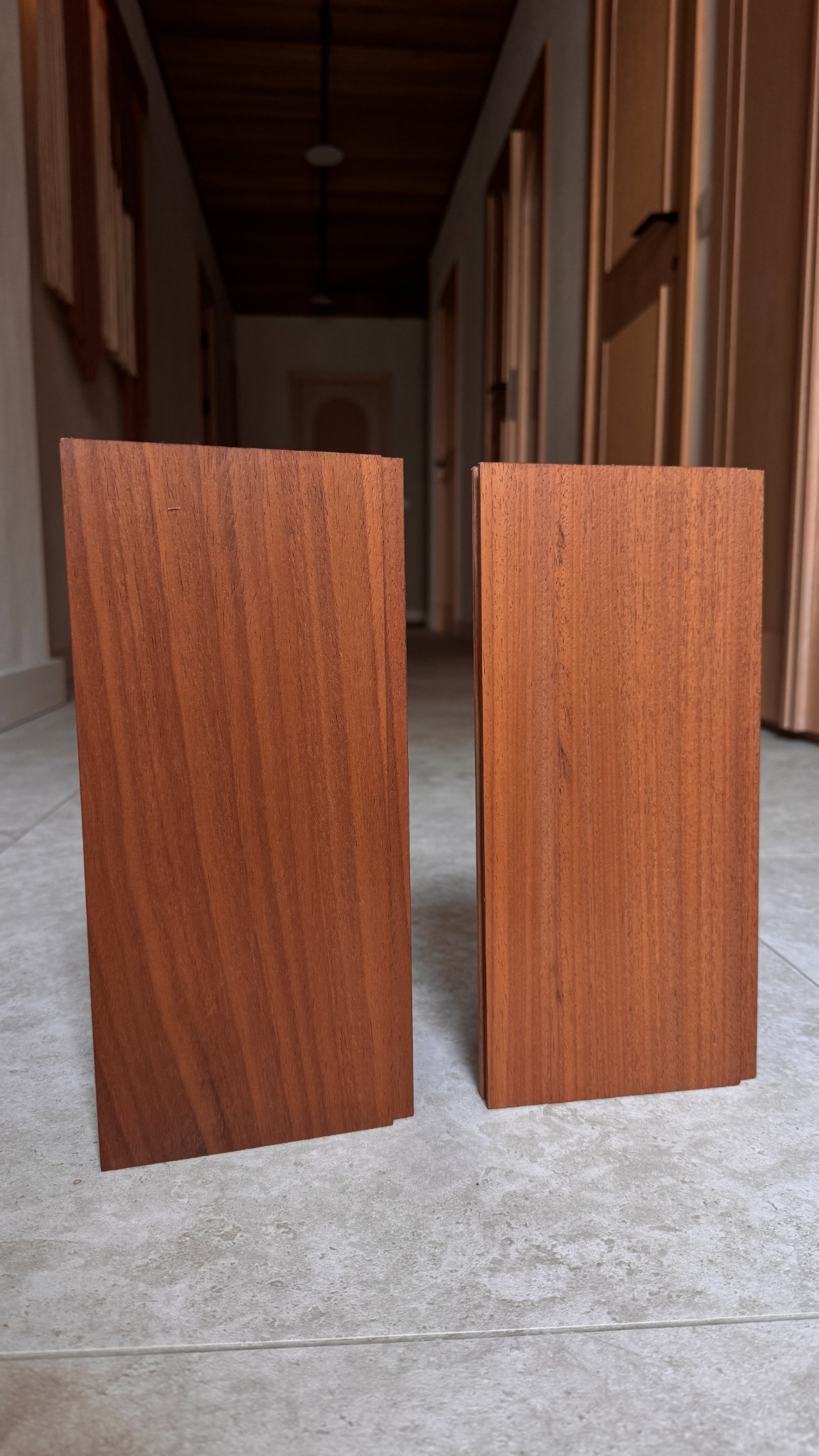
Finished by hand, board by board
The samples shown are finished with clear wax. An oil finish is also available and can deepen the tone for a darker Abachi look. We apply both wax and oil by hand, working with the grain and checking every board for an even finish.
For a coordinated sauna interior, our preferred combination is waxed walls and oiled benches, using finishes approved for each surface and the intended sauna conditions. Each board is individually finished for your project. Review a physical sample to choose the tone.
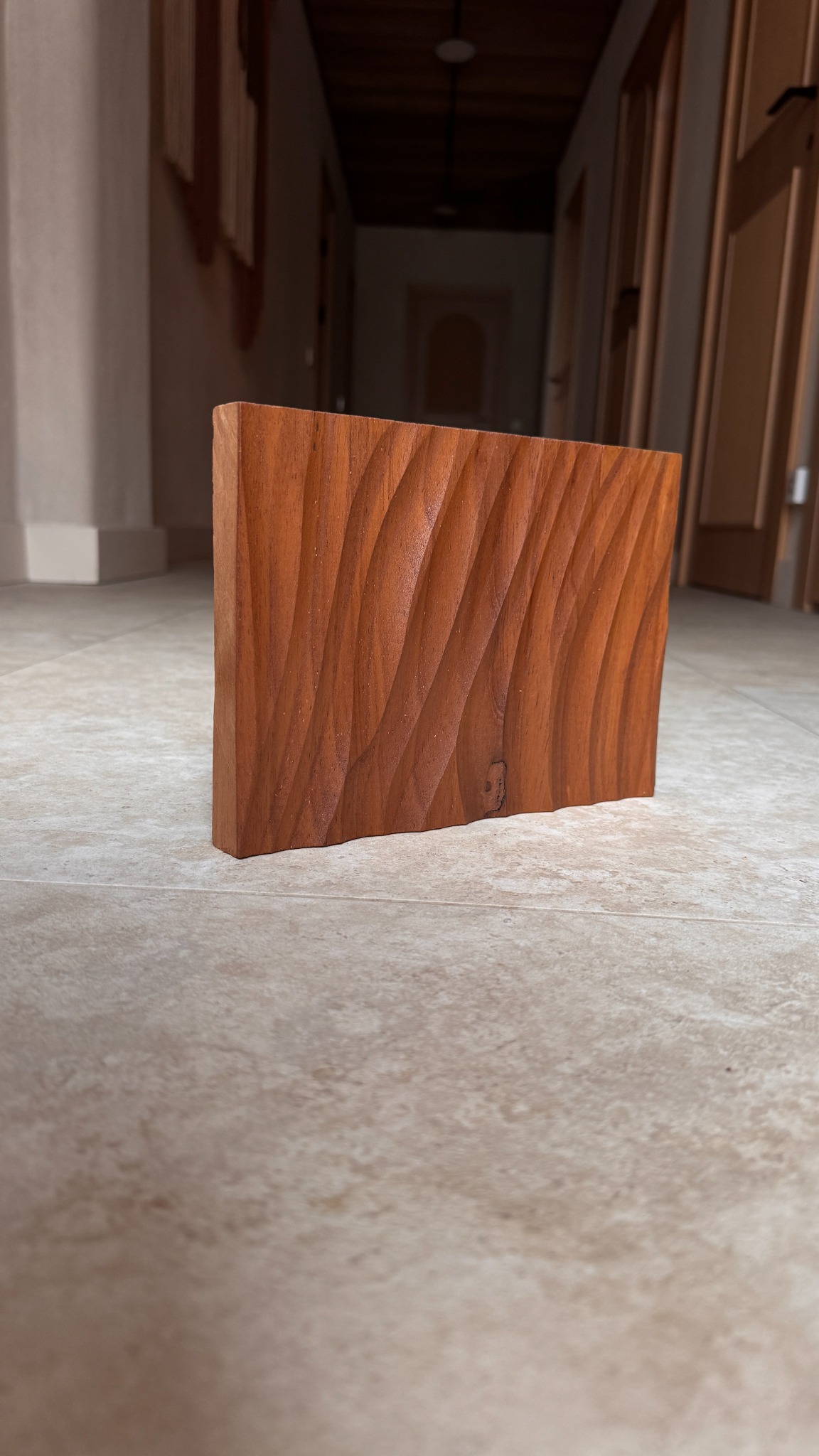
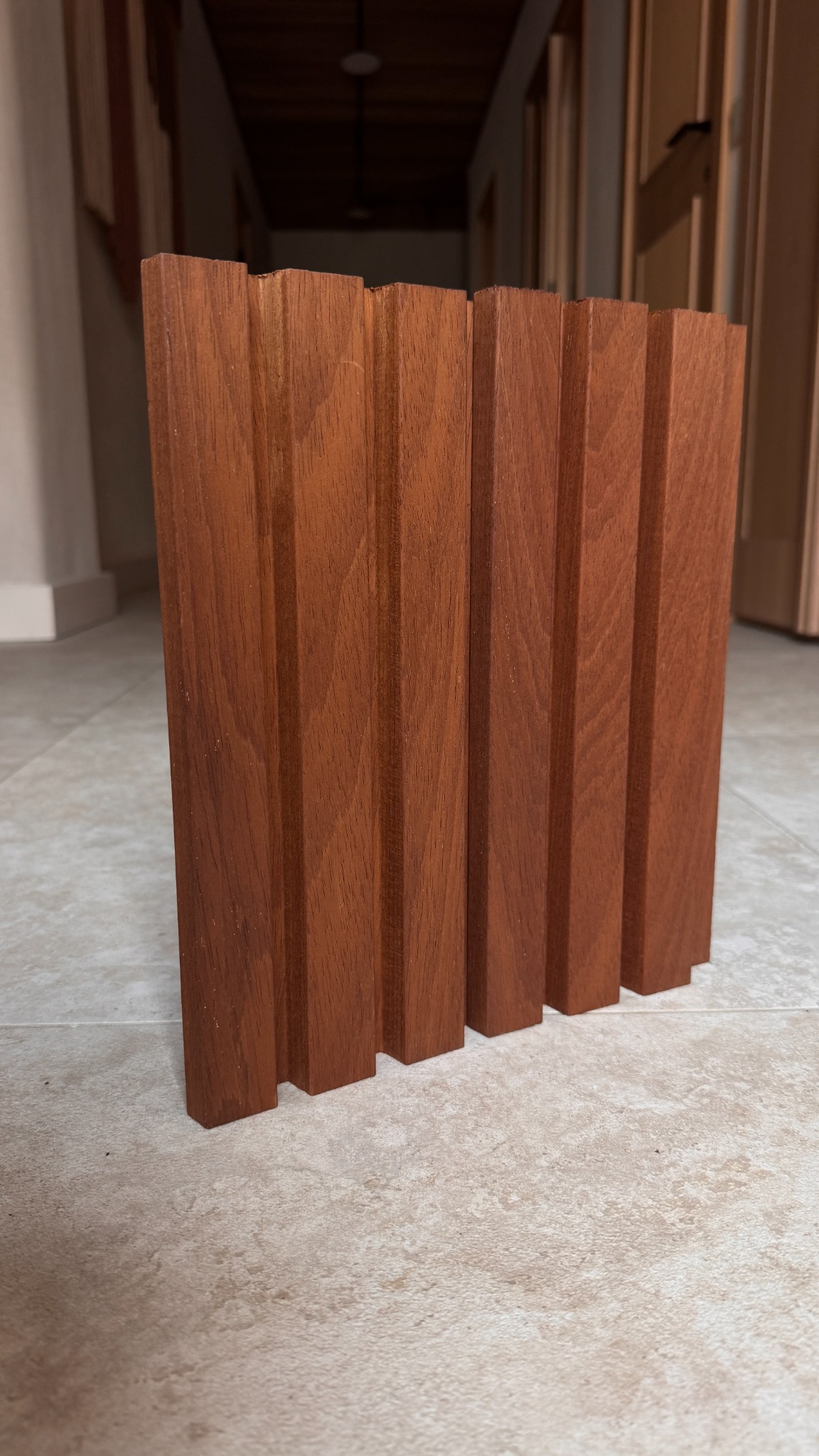
CNC-patterned Abachi panels
Abachi can also be made into panels approximately 78.74 × 47.24 in — about 6.56 × 3.94 ft (2000 × 1200 mm). CNC machining creates the flowing or fluted relief, followed by hand-applied wax or oil. The photographs show small pattern samples, not full-size panels. Discuss the pattern, panel construction and intended installation with us.
ecosh Abachi board dimensions in US units
Board lengths: approximately 9.84–14.76 ft (3–4.5 m).
| Thickness | Overall width | Coverage width |
|---|---|---|
| 0.59 in | 3.54 in | 3.15 in |
| 0.79 in | 5.51 in | 5.12 in |
| 1.10 in | 7.48 in | 7.28 in |
Converted from 15 × 90 mm (80 mm coverage), 20 × 140 mm (130 mm coverage), and 28 × 190 mm (185 mm coverage). Coverage is the visible width after the boards are joined. Use coverage width when calculating the number of boards; final dimensions and availability are confirmed in your quote.
These dimensions help you plan your layout. For pricing, quantities and delivery, visit our Abachi product section.
Cleaning and caring for Abachi benches
Use a seat towel, clean the surface according to the bench and finish instructions, and let the room dry after use. Pay attention to areas beneath the seating as well as the visible top surfaces.
Choose cleaning products compatible with the installed finish and avoid leaving the wood soaking. Inspect edges, surfaces and fixings during routine care. If the surface needs refinishing, establish what is already on it before adding another treatment.
There is no useful universal oiling interval for every sauna. Frequency of use, cleaning, ventilation and the treatment system all matter. Follow the supplier's care plan and assess the actual condition of the bench.
Choosing Abachi for your ecosh project
If you are buying timber, send us the intended use, required quantity or area, your drawings if available, and the delivery ZIP code. Our sauna wood page is the place to request Abachi pricing, profiles and availability.
If you are choosing a complete sauna, compare the ecosh modular layouts and interiors and ask which bench material is specified for your selection. A sample is the best next step when colour and touch will decide the choice.
Frequently asked questions
Are Abachi, ayous and obeche the same wood?
These trade names commonly refer to Triplochiton scleroxylon. Confirm the botanical species and treatment when ordering, especially when comparing differently named products.
Is Abachi the best wood for sauna benches?
It is a useful option for its low weight, relatively low thermal conductivity and pale appearance. The best choice also depends on board quality, bench construction, finish and your design preferences.
Does Abachi stay cool in a sauna?
No. It warms up, but its relatively low thermal conductivity helps explain why it can feel more comfortable in contact with skin than highly conductive materials. It is not burn-proof.
Can Abachi sauna benches be stained dark?
Some bench-approved sauna treatments offer colour options. Check the exact product's suitability, compatibility and instructions, and test a sample. Ordinary furniture stain is not automatically suitable.
Can I use Abachi for decorative sauna walls?
Yes, with a product or assembly suitable for that location. Confirm the panel's adhesive, backing, finish and installation requirements as well as the wood species.
What Abachi board sizes does ecosh supply?
ecosh offers board lengths of approximately 9.84–14.76 ft. Thickness × overall width / coverage width: 0.59 × 3.54 / 3.15 in; 0.79 × 5.51 / 5.12 in; and 1.10 × 7.48 / 7.28 in. CNC-patterned panels can be made at approximately 78.74 × 47.24 in. Confirm your profile, quantity and availability with your quotation.