
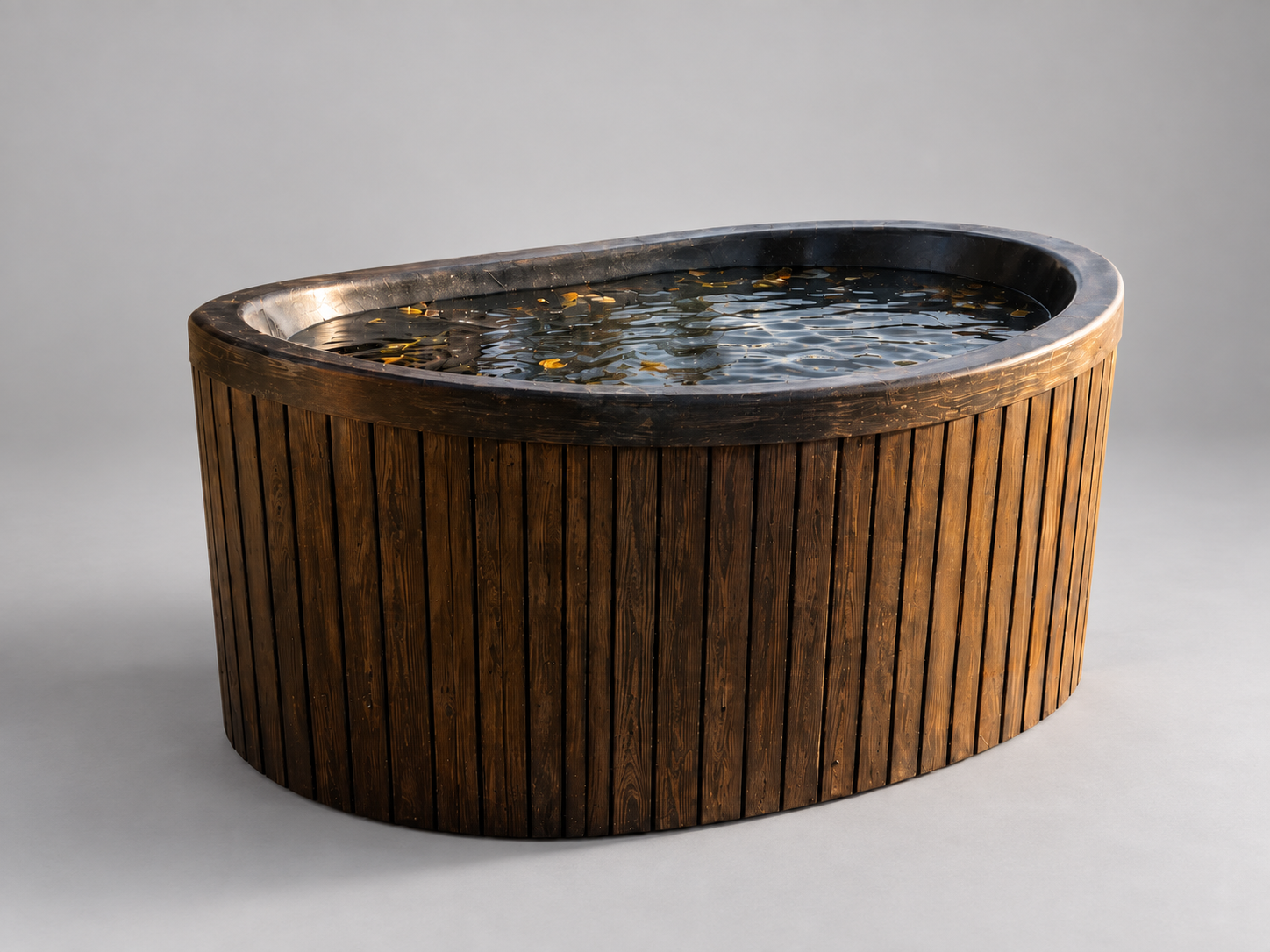
The best cold plunge tub is not necessarily the coldest, most expensive or most heavily equipped model. It is the one that fits your home, feels comfortable to use and is ready often enough to become part of your routine.
For occasional use, a simple tub and ice may be all you need. For regular use, a permanent tub with a properly sized chiller can save time, hold a more consistent temperature and look at home beside a finished patio or outdoor sauna. This guide explains how to choose between those options.
Comparison of Home Cold Plunge Types
The comparison below describes common design trade-offs. Features, maintenance and outdoor suitability depend on the specific model and its installation.
| Type | Typical upfront cost | Temperature control | Ice required | Maintenance | Visual quality | Outdoor suitability | Best-suited user |
|---|---|---|---|---|---|---|---|
| Inflatable / portable | Often lower | Depends on ice and insulation without a chiller | Often yes | Water care plus ice or chiller upkeep | Varies by model | Check outdoor and ambient ratings | Testers and travelers |
| DIY / stock tank | Often lower | Manual unless a chiller is added | Usually yes | Varies by model | Often lower | Check vessel materials and outdoor rating | Hands-on experimenters |
| Barrel | Mid; chiller often extra | Varies | Common without a chiller | Moderate | Depends on materials and finish | Requires an outdoor-rated design | Compact-space users |
| Permanent chiller-based | Often higher; configuration varies | Dedicated cooling (and sometimes heating) | Usually unnecessary within rated conditions | Planned, ongoing | Depends on design and finish | Requires outdoor rating and appropriate siting | Frequent users who want a fixture |
What Makes a Good Home Cold Plunge?
A home cold plunge has one job: hold a usable volume of cold water, safely, on the days you actually want it. Everything else is a trade-off.
The features that tend to matter in practice are:
- Temperature you can reach and hold without a daily ice run
- A shape you can sit in without cramping
- Materials that survive sun, water and cleaning
- A clear plan for electricity, drainage and service
- Water care you will actually keep up with
- A look you can live with in the yard or a side room
Marketing language often treats “cold plunge” as one product. It is not. An inflatable liner, a livestock trough, a cedar barrel and a hard-shell tub with a dedicated chiller are different objects with different ownership costs.
Main Types of Cold Plunge Tubs
Inflatable tubs
These are portable shells, often sold with a cover and sometimes paired with a small chiller. They cost less up front, pack away, and work for people who are testing the habit. Check the specified insulation. Hot weather increases cooling demand. Consider whether the appearance suits the space.
DIY setups and stock tanks
Stock tanks remain a common low-cost starting point. If you add a pump or chiller, every electrical and plumbing component must be purpose-rated and installed for wet-location use. A non-purpose-built household appliance should not be converted into an immersion tub.
Barrel plunges
Barrels use less floor area and can look intentional. Vertical barrels ask you to stand or sit upright. Horizontal barrels feel more like a short soak. Wood looks handsome when new; it also needs care outdoors. Many barrels are sold without a chiller, so ice or an add-on cooler still decides whether the water stays cold.
Permanent chiller-based plunges
These are hard-shell tubs meant to stay in place, usually with a dedicated cooling unit, circulation and a finished exterior. They cost more. A correctly sized system can reduce routine ice purchases; appearance and performance vary by model. Confirm the current ecosh Cold Plunge specification, materials and included equipment before comparing it with other systems.
Chiller or Ice: Which Is Better for Regular Use?
Ice works. It also has a calendar. Each session needs planning, storage space and a way to dispose of meltwater. For someone who plunges two or three times a month, that friction is acceptable. For someone who wants a consistent temperature before work, ice becomes a second job.
For any tub, evaluate performance using its actual water volume, published cooling capacity, flow requirements, ambient-temperature range and test conditions. Horsepower alone does not predict cool-down time.
What Chiller Capacity Actually Means
Horsepower is a size class, not a promise of a specific water temperature in every climate. Cooling load rises when:
- The tub is large
- The shell is poorly insulated
- The lid is off
- The tub sits in direct sun
- The air around the condenser is hot and still
- You drop the target temperature
A heating function can widen the usable water-temperature range. It should not be treated as freeze protection; always follow the manufacturer’s operating-temperature and winterization instructions.
Match the chiller to the water volume and the climate, not to the most aggressive number on a product card.
Materials, Insulation and Durability
A smooth fiberglass interior can be wiped down using the manufacturer’s approved products. Compare the actual surface, seams and drainage rather than assuming one material is always easier to clean. Thermally modified wood on the exterior is chosen for dimensional stability in weather, not because wood is maintenance-free. Sun, standing water at the base and debris still need attention.
Insulation, if present, slows heat gain.
Ask what the interior is made of, how the exterior is finished, how the unit is supported when full, and what cleaners the maker allows. Do not assume a spa chemical routine is automatically safe for a cold-plunge shell or its seals.
Filtration and Water-Care Questions to Ask
Cold water does not stay clean by being cold. Skin oils, sunscreen, leaves and dust still enter the tub. Circulation helps. Filtration helps if the system actually has a filter you can service. Sanitation needs a method the manufacturer has approved.
Before you buy, ask:
- Is there a filter, and what is the replacement interval?
- What sanitation method is approved for this shell and this chiller?
- How do you drain the tub, and where does the water go?
- What happens if someone uses the wrong oxidizer?
CDC guidance for home pools and hot tubs is a useful reminder that disinfectant residual and pH need testing when chemicals are used, and that product labels govern dosing. Do not mix sanitizers. Do not invent a homemade recipe.
Indoor vs. Outdoor Placement
Indoor placement needs a floor designed for the filled load, a drain plan, humidity control and a way to vent chiller heat. Outdoor placement needs a level base, shade or a cover strategy, airflow around the condenser and electrical service installed to the equipment listing, manufacturer instructions and local code by a licensed electrician. See our California outdoor cold plunge planning guide.
California adds sun and, in some counties, careful rules about outdoor electrical work and drainage. Requirements vary by city. Confirm them locally rather than copying a neighbor’s setup.
The ecosh product page lists a 550-liter tub. A full 550 liters of water alone would weigh approximately 550 kg (1,213 lb). Use the actual operating fill and add the tub, equipment and users when assessing the supporting structure; nominal capacity is not the complete installed load.
Size, Entry and Everyday Comfort
Compare oval and barrel shapes against your own seated posture and mobility needs. Entry height, bench or floor depth, and whether you can get a handhold matter more than a gallon number on a spec sheet. Try before you buy if you can. If you cannot, sit in a similar volume and notice where your knees and shoulders land.
Daily comfort also includes the walk from the house or sauna, a place to leave a towel, and lighting if you use the tub after dark. Our California outdoor sauna guide considers the wider backyard layout.
Noise, Electricity and Maintenance
Chillers make mechanical noise. Place the unit where airflow is open and where the sound will not sit under a bedroom window. Outdoor electrical work should be done by a licensed electrician. Do not treat a household extension cord as a plan.
Maintenance is mostly unglamorous: wipe the waterline, empty the skimmer or strainer if there is one, check hoses, keep leaves off the cover, and follow the chiller manual. Skipping that work quickly shows in water quality.
What Does a Good Cold Plunge Cost?
The ecosh tub, 2 HP chiller and cover package is listed at $5,900 USD. Compare it with other complete packages rather than shell-only prices. For delivery terms, site-work budgeting and worked running-cost examples, see our cold plunge cost guide.
For frequent use, recurring ice purchases can become material. Compare local bag prices and expected sessions with the chiller’s rated energy use. Site work – including the base, electrical service and drainage – can also rival the cost of a budget tub.
Before purchasing, request a current written quote covering the equipment, delivery, installation responsibilities and warranty terms.
Who Is ecosh Cold Plunge Designed For?
The ecosh Cold Plunge is listed at $5,900 USD for the tub with thermowood exterior, a 2 HP chiller and a cover. The product page describes a 550-liter fiberglass tub. Applicable sales tax and availability are confirmed before ordering.
Free local delivery is offered in San Diego, Carlsbad and Encinitas, and within 10 km (about 6.2 miles) of those areas, subject to address confirmation. Other locations are quoted separately. Site preparation, electrical work, unloading and final placement should be agreed in the written quote; do not assume they are included in the delivery offer.
This is a product-fit guide, not an independent ranking of every brand. ecosh sells the system described here. Its strongest fit is a homeowner planning a permanent installation who values a finished wood exterior and cooling without routine ice purchases.
It suits people who:
- Want a chiller instead of a standing ice order
- Want to compare bathing shapes and surface finishes
- Care how the exterior reads against wood, stone and planting
- Are building a backyard ritual rather than testing a trend
It is a poor fit if you only want the cheapest portable entry, if you need to pack the tub away each season, or if you are unwilling to plan power and a level base.
The strongest fit is a homeowner who wants a permanent, design-conscious plunge as part of a wider backyard sauna environment.
Home Cold Plunge Buyer’s Checklist
- How many sessions per week will you actually take in six months?
- Indoor, covered patio or open yard?
- Can the delivery team and any required equipment reach the final spot?
- Is there a level, load-bearing base?
- Who will run the electrical circuit?
- Where does drain water go?
- Does the chiller have airflow and service space?
- What water-care method is approved?
- Does the tub’s shape and entry suit your body and mobility needs?
- What is included in the quoted price, and what is not?
Final Recommendation
Buy for the habit you will keep, not the photograph you liked. If the plunge is occasional, a simple vessel and ice can be enough. If it is part of the week, spend the money on a shell you trust, a chiller sized to the water and the climate, and a place that is safe to walk to with cold feet.
For a California homeowner pairing a plunge with an outdoor sauna, compare the tub, chiller and site plan as one purchase. Confirm specifications, inclusions and local installation rules before ordering.
Considering a permanent cold plunge for your California home?
Explore ecosh Cold Plunge or plan a complete space with ecosh Sauna.
Frequently asked questions
What is the best type of cold plunge tub for home?
The best type is the one you will use. Occasional users can start with ice and a simple vessel. Regular users usually do better with a hard-shell tub and a dedicated chiller.
Do I need a chiller?
Not if you accept buying ice and living with a moving temperature. For frequent use, a chiller is the practical way to keep a set point.
Can I put a cold plunge indoors?
Yes, if the floor load, moisture, drain path and chiller ventilation are solved. Many homeowners still prefer outdoors because splash and noise are easier to manage.
How much electricity does a cold plunge use?
It depends on chiller size, insulation, climate, lid use and target temperature. Treat electricity as a running cost and ask the manufacturer for typical draw.
How much maintenance is involved?
Plan on waterline cleaning, debris removal, water testing if you use sanitizer, filter service if the system has a filter, and periodic draining.
What size tub do I need?
Choose a shape you can sit in with shoulders relaxed. Volume matters for chiller sizing; comfort matters for whether you return.
Do cold plunge tubs require ice?
Ice-only setups do. Chiller-based tubs are designed to run without a regular ice purchase.
Sources and further reading
- American Heart Association News, “You’re not a polar bear: The plunge into cold water comes with risks,” Dec. 9, 2022. Read the source
- Harvard Health Publishing, “Cold plunges: Healthy or harmful for your heart?” June 1, 2025. Read the source
- CDC, Home Pool and Hot Tub Water Treatment and Testing. Read the source