
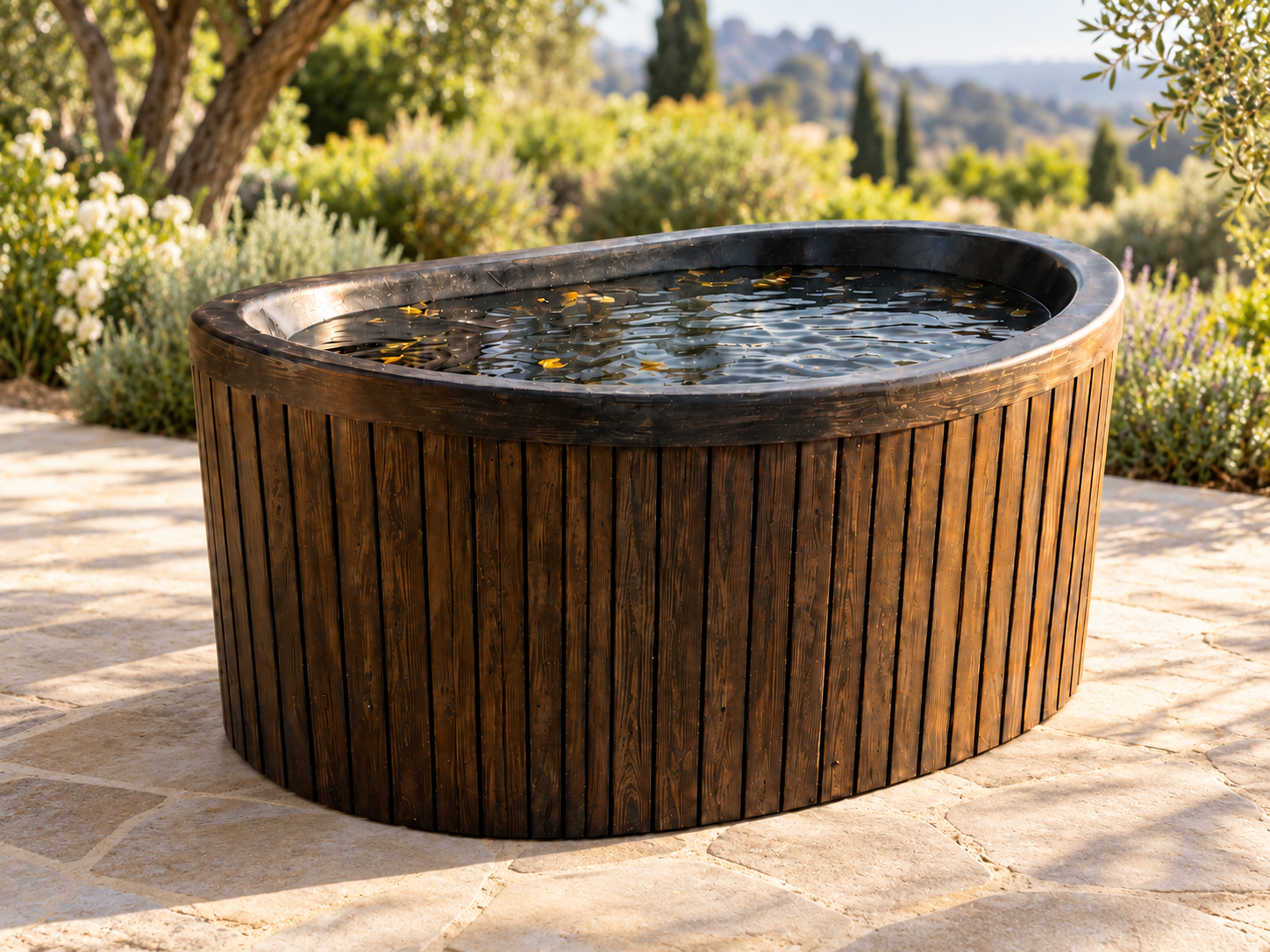
A well-planned outdoor cold plunge should feel as though it has always belonged in the yard. Getting there takes more than choosing a tub: the base must support the filled weight, the chiller needs airflow, electricity must be safely installed, and the water needs somewhere locally compliant to drain.
In California, sun exposure, summer heat, coastal air and local building requirements also affect where the plunge should go. Planning these details before delivery makes installation easier and the daily ritual far more enjoyable. For the wider backyard layout, see our guide to outdoor saunas in California.
Is an Outdoor Cold Plunge Right for Your Backyard?
It is a good fit if you have a stable patch of ground, a realistic electrical path and a reason to step outside in the morning or after a sauna. It is a weak fit if the only space is a sloped, unreachable corner, if the HOA forbids mechanical equipment, or if you hoped to hide a chiller with no airflow.
Choose equipment rated for the outdoor conditions at your site. Covers, sun, leaves, irrigation overspray and winter nights all become part of ownership.
How Much Space Do You Need?
Measure more than the tub footprint. Leave room to step in and out on both sides if you can, space for a towel hook or bench, clearance around the chiller for air and service, and a walking path that does not cross a slick slope.
The ecosh product page lists a 550-liter tub. At that water volume, water alone weighs approximately 550 kg (1,213 lb). The installation assessment must use the actual operating fill plus the tub, equipment and users. Have the supporting structure assessed for that complete load.
Make a simple site sketch before ordering
Draw the tub and chiller to scale using the confirmed exterior dimensions. Mark the gate width, delivery route, tub entry, sauna door swing, water supply and proposed drain route. Add each manufacturer-required intake, exhaust and service clearance separately; a tidy-looking gap is not necessarily enough.
For an initial ecosh review, send your ZIP code, a wide photo of the proposed location and measurements of the space and narrowest access point to our team. We can then identify which product and delivery details need confirming before you commission site work.
Choosing the Best Location
Walk the yard at the hour you would actually use the plunge. Morning shade in September is not the same as 3 p.m. glare in July.
Look for:
- A short, safe walk from the house or sauna
- Partial shade or a planned shade structure
- Privacy from neighbors and street
- Room for delivery
- Distance from bedroom windows if the chiller cycles at night
- A grade that can be leveled without a major rebuild
Avoid low spots that collect irrigation water, and avoid placing the condenser in a closed box.
Creating a Level and Load-Bearing Base
An uneven or inadequately supported base can stress the shell and plumbing. The base must be level, drained, designed for the complete filled load and consistent with the manufacturer’s approved support specification.
Concrete, properly installed pavers or an engineered deck may be suitable when designed to support the complete filled load and when they meet manufacturer installation requirements and local rules.
Plan surrounding drainage so splash does not collect against the tub base or any wood cladding. Follow the manufacturer’s support and exterior-care instructions.
Electrical Planning
Outdoor power for a chiller is not an extension-cord project. Have a licensed electrician install the exact circuit, connection, disconnect and protection required by the equipment listing, manufacturer instructions and local authority.
Electrical and permit requirements depend on the location, equipment and project scope. Have the electrician assess the existing supply and ask the local authority about permits and inspections before installation.
Filling, Draining and Managing Water
You will fill the tub more than once. A nearby outdoor faucet saves a long, leaking run of hose. Draining is the question people skip.
Responsible drainage means knowing where the full water volume will go. Ask the local wastewater or stormwater authority whether discharge to a sanitary connection, a suitable landscape area or a pump-out service is appropriate. Treatment chemicals, water volume, runoff and local rules all matter. Do not discharge to a storm drain without confirming that the water and discharge method meet local requirements.
Local examples include Placer County’s pool-water discharge guidance and Fillmore’s pool drainage guidelines. Check the rules for your own address.
Before winterizing or leaving the system unused, follow the manufacturer’s draining, storage and restart instructions for the tub, hoses and chiller.
Chiller Ventilation and Service Access
The chiller needs to reject heat. Follow the manufacturer’s intake and exhaust clearances and leave a path for a technician to reach serviceable components, fittings and electrical connections without dismantling a fence.
Do not bury the chiller in decorative slats with no openings. Do not set it where leaf litter will cake the coil. A little distance from the tub is fine if the hose run stays within the length the manufacturer allows.
Sun, Heat and Weather in California
California contains several distinct climates. Coastal temperatures may reduce cooling load, while salt air can increase corrosion risk. Inland and desert heat can raise the cooling load, and mountain nights can bring a much wider temperature swing.
Practical responses:
- Use a tight cover whenever the tub is idle
- Provide shade over the water if the site is baked
- Keep the condenser out of reflected heat off stucco and concrete where you can
- Clean ash and dust from covers and chiller components according to the manufacturer’s instructions
- Check water condition and follow the approved water-care routine during hot weather
Consider how the tub’s exterior will sit alongside the sauna and landscape. Confirm the finish and its maintenance requirements before choosing materials.
Privacy, Lighting and Safe Access
Cold feet and wet stone are a bad pairing. Choose a walking surface with texture, a modest grade and lighting that shows the edge of the tub at night. A simple handhold near the entry is more useful than a sculptural step with no grip.
Privacy matters because people hesitate to use a tub they feel watched in. A screen, hedge or building corner is part of the ritual, not decoration.
Placing a Cold Plunge Next to a Sauna
The walk between heat and cold should be short enough that you do not cool off in the wrong place, and long enough that splash does not wet the sauna threshold. There is no single correct distance. Think in steps, not in a marketing number.
Leave room for a bench between the two. That rest spot is where the ritual actually happens. Keep the path slip-resistant and free of hose loops. Our traditional Finnish sauna guide offers more context for planning the sauna side of the space.
If both products share a pad, design the pad for the combined load and for drainage away from both wood skirts.
Planning a Complete Backyard Wellness Area
A finished area usually includes:
- Sauna
- Cold plunge
- A place to sit and drink water
- A hook for a robe
- Soft lighting
- A rinse option if you do not want the plunge to collect sunscreen and dust
You can phase it. The mistake is buying the tub before the path, power and shade exist.
Outdoor Cold Plunge Installation Checklist
Before delivery:
- Confirm outside dimensions and service clearances
- Confirm the complete filled load, including the actual water volume, tub, equipment and users
- Build or verify a level, drained, load-bearing base
- Plan the electrical run with a licensed electrician
- Locate hose water and a legal drain path
- Give the chiller airflow and service access
- Note sun path and add shade or a serious cover plan
- Walk the delivery route: gates, stairs, side yards, crane need
- Ask the city or county what, if anything, they want to see
- Decide how a wet person gets back to the house at night
Common Planning Mistakes
- Ordering the tub before measuring the gate
- Setting a chiller in a decorative box with no air
- Assuming the patio “feels solid” without checking load
- Running power on a cord under a rug
- Leaving the water uncovered in July
- Draining into a storm inlet
- Putting the entry on the downhill side of a slick deck
- Treating permits as a rumor instead of a phone call
Final Recommendation
Before delivery, resolve four practical questions: what supports the full load, how the equipment receives power, where the water drains and how you will enter and leave with wet feet. Getting those details right matters more than finding the perfect corner in a photograph.
For an ecosh installation, confirm the current product specifications, approved support, electrical requirements and site access before arranging delivery.
Planning a sauna and cold plunge area in California?
Explore ecosh outdoor saunas and ecosh Cold Plunge to begin planning a coordinated backyard setting.
Frequently asked questions
Can an outdoor cold plunge sit in direct sunlight?
Only if the tub and chiller are rated for the site’s weather and ambient-temperature range. Direct sun raises cooling load; a fitted cover and shade generally reduce heat gain.
What power does an outdoor cold plunge need?
Follow the manufacturer’s electrical specification and have a licensed electrician install it.
Where can I drain the water?
Only where local rules allow. Ask before the first drain. Treated water does not belong in every garden bed or storm drain.
Do I need a concrete foundation?
You need a level, drained base designed for the complete filled load. Concrete, pavers or a deck may be suitable only when they meet manufacturer installation requirements, structural needs and local rules.
How does weather affect an outdoor cold plunge?
Sun raises cooling load, while leaves and dust add debris. Check the equipment’s approved ambient-temperature range and follow its freeze-protection and winterization instructions. Do not assume that circulation or a heating function provides freeze protection. Coastal salt air may also affect maintenance.
How close should it sit to a sauna?
Allow a short, clear, slip-resistant route while keeping splash away from the sauna threshold. Follow required clearances and leave space for a rest bench.
Do I need a permit in California?
Permit and inspection requirements vary by city, county and project scope. Confirm electrical, drainage, structural and any pool or spa requirements with the local authority before installation.
Sources and further reading
- CDC: Home Pool and Hot Tub Water Treatment and Testing. This general water-care guidance does not replace the equipment manufacturer’s approved instructions.
- Illustrative load calculation: one liter of water has a mass of approximately one kilogram; 550 L is approximately 550 kg (1,213 lb). Actual installation loads must use the selected equipment’s specifications.