
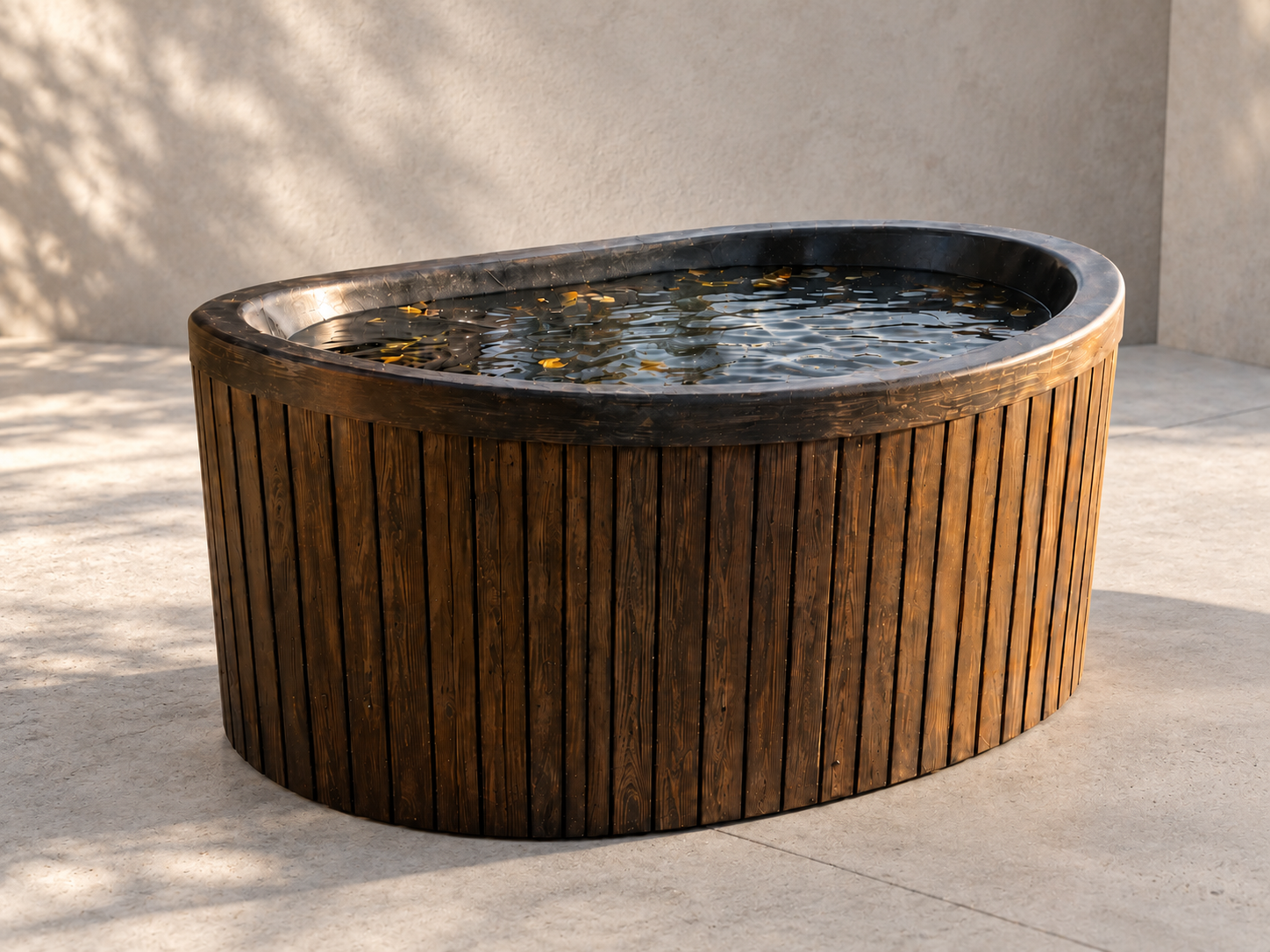
Both an ice bath and a chiller-based cold plunge can deliver cold-water immersion. The difference is how much preparation each session requires. Ice usually has the lower entry cost, while a properly matched chiller keeps the water ready and maintains a more consistent temperature.
The right choice depends mainly on how often you plan to plunge, where the tub will sit and how much time you want to spend buying, storing and handling ice.
What Is a Traditional Ice Bath?
A traditional ice bath is a purpose-suitable vessel filled with water and cooled with ice. Ice cools the water as it melts; once cooling from the remaining ice can no longer offset incoming heat, the water warms. The setup is simple, but sessions require ice preparation according to the starting conditions.
What Is a Cold Plunge with a Chiller?
A chiller removes heat from circulating water through a refrigeration circuit. A properly matched unit can maintain a selected temperature within its rated load and ambient conditions. Some units also heat, widening the selectable temperature range; heating does not replace winterization or guarantee operation below the published ambient range.
For a home installation, the tub and chiller need to be matched using manufacturer specifications. Cooling time depends on water volume, starting temperature, air temperature, sun, insulation, lid use and target set point.
Temperature Consistency
An ice bath’s temperature depends on the starting water temperature, amount of ice, mixing and heat entering the vessel. A properly sized chiller provides a more consistent experience by maintaining a selected temperature within its rated conditions.
Setup Time and Daily Convenience
Ice: buy or freeze, haul, dump, wait, get in, deal with melt.
Chiller: follow the pre-use water-quality and equipment checks in the owner manual. Once installed and maintained, a matched system can reduce the preparation needed for each session.
Cost of Ice vs. Electricity
Ice is a recurring purchase unless you make it yourself; a chiller uses electricity and requires maintenance. Which costs less depends on local prices, use frequency, climate, equipment and cover use.
Estimate electricity cost using manufacturer power-consumption data, a realistic duty cycle and your local utility rate. Electrical ratings alone do not establish typical monthly consumption.
Put your own numbers into the comparison
Consider two hypothetical budgets. Two $5 bags of ice per session, three times a week, total $1,560 a year. A complete chiller system using 3 kWh per day at $0.30 per kWh totals $328.50 a year in electricity. Neither figure is a product-performance claim: actual ice needs and electrical consumption vary substantially.
The difference is not your net saving. Include the chiller purchase, service, water-care supplies and site work, and compare equivalent usage. For a full example and the ecosh package price, read the cold plunge cost guide.
Water Circulation and Cleanliness
Standing ice water still needs care. Circulation in a chiller loop reduces dead zones and can support a filter if the system has one. It does not replace sanitation. Cold is not a disinfectant.
Noise and Equipment Placement
An ice-filled vessel has little equipment noise. A chiller adds compressor and fan noise. Check manufacturer noise information and airflow clearances, and consider nearby bedrooms and neighbors when choosing its location.
Indoor and Outdoor Use
Indoor installation requires a suitable supporting surface, moisture management, drainage and electrical provision. Outdoor equipment must be rated for its intended exposure and installed with the clearances and protection specified by the manufacturer.
Environmental and Practical Considerations
Ice is packaged, transported and melted. A chiller uses electricity and contains refrigerant that must be handled by qualified people at end of life. Neither path is weightless. The practical difference for most households is trips to the store versus a well-sited machine.
Which Is Better for Occasional Use?
For occasional use, a purpose-suitable ice-bath vessel may offer a lower-cost way to explore the routine. Compare the full setup and ongoing ice costs before buying.
Choose a vessel designed or approved for the intended use, with suitable access, support and drainage. Consider whether preparing ice fits the routine you want.
Which Is Better for Frequent Use?
A matched tub and chiller may be more convenient for frequent use because it can maintain a selected temperature within its rated conditions.
More use adds more contaminants to the water. Both ice baths and chiller systems require an approved care routine; circulation or an installed filter does not by itself disinfect water.
Choosing a Chiller for a Permanent Home Setup
Choose a chiller using the manufacturer’s guidance for water volume, cooling capacity, flow, insulation, ambient conditions and target temperature. Some models also heat; confirm the functions of the specific equipment you are considering.
For a permanent installation, evaluate the complete system and its site requirements. Ask for performance figures with stated test conditions rather than inferring cool-down time from a horsepower label.
Decision Checklist
- Expected sessions per week
- Willingness to buy ice
- Indoor or outdoor
- Shade and cover discipline
- Power availability
- Noise tolerance
- Appearance and integration with the yard
- Water-care willingness
Comparison table
Factor |
Traditional ice bath |
Cold plunge with chiller |
|---|---|---|
Initial cost |
Usually lower |
Usually higher |
Recurring cost |
Ice, often |
Electricity, water care |
Temperature control |
Varies with ice quantity and heat gain |
Holds a set point within equipment limits |
Preparation time |
High |
Low after install |
Ice required |
Yes |
No for normal use |
Noise |
Low except logistics |
Mechanical noise at the unit |
Maintenance |
Approved water care and cleaning, plus ice preparation |
Chiller care, water care, cover use |
Portability |
Often higher |
Usually a fixed install |
Frequent use |
Requires recurring ice preparation |
Can reduce recurring preparation |
Final Comparison
Choose an ice bath if its preparation and costs suit your expected use. Consider a chiller-based system if regular readiness justifies the equipment and site work. Compare the complete package, installation requirements and approved care routine.
Some purpose-suitable vessels can be paired with a compatible chiller, but plumbing, flow, electrical safety and equipment listing must be verified before modification.
Plan a home cold plunge
Explore ecosh Cold Plunge and review the outdoor cold plunge planning guide. For a combined setup, visit ecosh Sauna.
Frequently asked questions
Does a chiller remove the need for ice?
A correctly matched chiller is intended to cool without routine ice, within its rated operating conditions.
What does a chiller cost to run?
Electricity in proportion to load. Hot, uncovered water costs more to hold cold than shaded, lidded water.
How fast will a chiller cool the tub?
It depends on volume, starting temperature, weather, insulation and set point. Do not treat an unverified minute-count as a specification.
Can I use a chiller outdoors?
Yes if the unit is rated for the exposure and has airflow, weather protection and correct electrical work.
Does a chiller clean the water?
The chiller loop circulates water. Water care still requires the complete approved process; circulation and filtration alone do not disinfect water.
What size chiller do I need?
Use the manufacturer’s sizing guidance for water volume, cooling capacity, flow, insulation, ambient conditions and target temperature. Horsepower alone is not enough.
Ice or chiller for occasional use?
A purpose-suitable vessel with ice may have a lower entry cost. Compare the complete setup and recurring ice costs.
Sources and further reading
- Harvard Health Publishing, cold plunges and cardiovascular caution, June 1, 2025. https://www.health.harvard.edu/heart-health/cold-plunges-healthy-or-harmful-for-your-heart
- American Heart Association News, cold-water shock risks, Dec. 9, 2022. https://www.heart.org/en/news/2022/12/09/youre-not-a-polar-bear-the-plunge-into-cold-water-comes-with-risks
- CDC home pool and hot tub water treatment. https://www.cdc.gov/healthy-swimming/about/home-pool-and-hot-tub-water-treatment-and-testing.html
Continue your planning
Compare the complete cold plunge investment. Understand ongoing water care.