
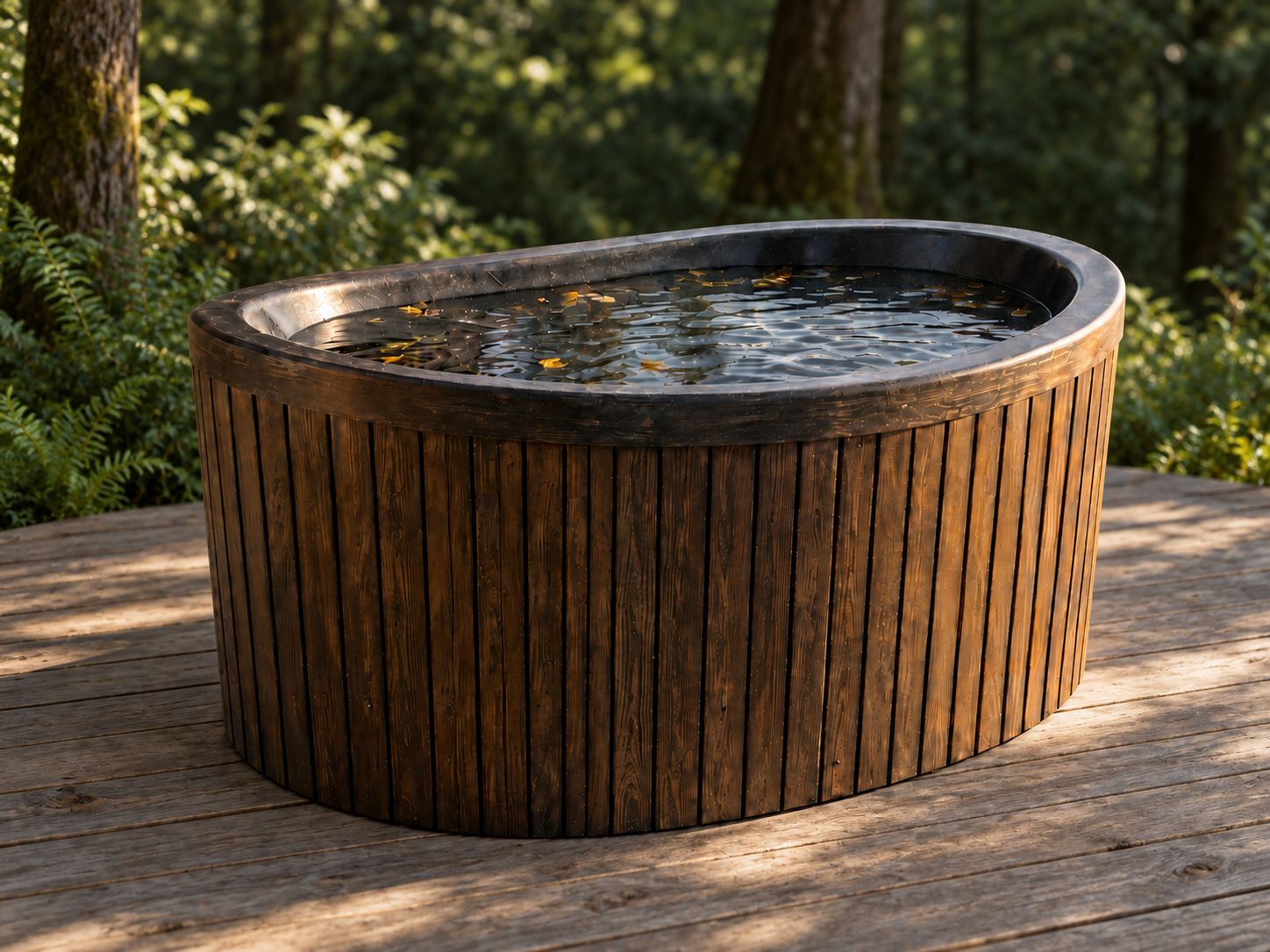
Clear cold-plunge water begins with a few consistent habits: rinse before entering, keep the cover on, remove debris, maintain circulation and follow the water-care method approved for your system. Cold temperature alone does not sanitize the water.
This is a general care framework, not an ecosh operating manual. Ask for the approved instructions for your exact tub and equipment before use; those instructions determine treatment, testing, filter service and drain intervals.
Why Cold Plunge Water Requires Maintenance
Every session adds skin oils, sweat traces, sunscreen and whatever was on the feet. Outdoors you also get dust, pollen and leaves. Warmer conditions can encourage microbial growth. Standing water in any backyard vessel needs a consistent care routine.
CDC pool and hot-tub guidance supports general principles such as testing and labeled sanitizer use, but it is not an ecosh cold-plunge dosing protocol.
Start With Cleaner Users
Shower or rinse before entering to reduce contaminants carried into the water. Keep pets out and avoid using the tub to wash dirty feet.
Remove Visible Debris
Remove floating leaves and insects with a clean skimmer. Clear debris from the cover before lifting it so it does not fall into the water. Keep the skimmer close to the tub so this becomes a quick part of the pre-use check.
Understand Circulation and Filtration
Circulation moves water through the system, and filtration removes particles according to the filter’s design. Neither alone disinfects water. Service installed filters according to the manufacturer’s instructions.
Check the equipment list and owner manual to identify the installed filtration and disinfection components and the approved method for the complete system.
Water Treatment and Sanitizing Options
Use only the water-care method validated for the complete tub, plumbing and chiller system. Do not assume frequent water changes alone control contamination; an approved process may include circulation, filtration, sanitizing, testing, cleaning and scheduled draining.
Rules that do not change:
- Use only products the tub and chiller maker allow.
- If the approved method uses an EPA-registered sanitizer, follow the product label and manufacturer instructions for its intended use.
- Do not mix sanitizers or oxidizers “to be safe.” Incompatible pairings can damage surfaces and can be unsafe.
- Use hydrogen peroxide or any other treatment only if the system manufacturer approves it and the product is labeled for the intended recreational-water use. Follow the label exactly.
- CDC pool and hot-tub guidance provides context for treated recreational water. Use the treatment targets and procedures specified for your system and approved products; do not substitute general pool guidance for the owner manual.
Does a “self-cleaning” cold plunge still need maintenance?
Yes. Ask the seller what the term covers. Automatic circulation, filtration or a treatment device does not remove the need for the owner checks and service tasks in the manual. You still need an approved process for contamination, filter care, cleaning and water replacement. Do not interpret “self-cleaning” as permission to leave the same water in indefinitely.
Why Water Testing Matters
When the approved method uses a sanitizer residual, measure it with a compatible test kit at the frequency specified by the owner manual and product label. Keep a log of results and corrective actions. Clear-looking water does not establish that treatment is adequate.
How Often Should You Change Cold Plunge Water?
Use the water-change schedule for your exact tub and care system. There is no reliable universal answer such as “every week” or “every month”: water volume, number of users, outdoor debris and the installed treatment system all affect the required routine. A large tub used by one person and a smaller tub shared by several people should not be assumed to need the same schedule.
Do not wait for the scheduled change if water-quality checks fail, contamination occurs or the water develops cloudiness, persistent odor, foam or film. Stop use and follow the manufacturer’s corrective procedure. Changing the water alone may leave contamination in hoses, filters or plumbing.
Outdoor debris and user load affect the care a tub needs. Follow the manufacturer’s testing and maintenance schedule and its instructions for changing conditions.
How to Clean a Cold Plunge Tub
Use the exact shutdown, draining, cleaning and restart sequence in the owner manual. The job includes more than wiping the visible shell: check which hoses, strainers and filters require attention, and which tasks belong to a service technician.
- Follow the manual’s shutdown and isolation steps before maintenance.
- Drain through the approved route for your property.
- Clean the shell and waterline using compatible, non-abrasive products.
- Service owner-accessible filters and plumbing components as directed.
- Complete any required disinfection, rinsing, refilling and water testing before restarting use.
This outline is a planning checklist, not a replacement for the equipment-specific procedure. Never run a pump dry or add a cleaner simply because it is sold for swimming pools.
Looking After the Chiller and Plumbing
Keep the equipment’s required airflow clear and inspect accessible hoses for leaks. Perform cleaning and other owner maintenance only as specified by the manual. Follow its shutdown and winterization instructions, and leave refrigeration work to qualified service personnel.
Outdoor Cold Plunge Maintenance
Use the cover as directed and keep irrigation spray away. After wind or other contamination, inspect and clean according to the approved procedure. Continue required water testing; appearance alone cannot establish water quality.
Maintenance Checklist: Follow the Manufacturer’s Schedule
Before use — Rinse off, remove debris and complete the water-quality and equipment checks required by the owner manual. Do not enter if results are outside the approved limits or water quality is uncertain.
After use — Replace the cover as directed, keep wet towels off the exterior and record unusual cloudiness, odor, leaks or equipment noise.
At the specified testing interval — Test using the approved kit and follow the manufacturer’s corrective procedure for results outside the required limits.
At the specified service interval — Inspect and clean the shell, service installed filters or strainers, and check fittings and equipment airflow according to the manual.
After contamination or failed water-quality checks — Stop use and follow the approved cleaning, disinfection, draining, refilling and restart procedure. Draining alone may leave contamination in plumbing.
For shutdown or seasonal storage — Follow the manufacturer’s winterization, timed-service and part-replacement instructions.
Signs to Stop Use and Follow the Approved Corrective Procedure
- Cloudy water or failed water-quality checks
- Smell
- Visible film or grit that returns overnight
- Unexplained or persistent foam
- Fecal or vomit contamination, or use by someone with diarrhea
- An uncertain care history or missed required maintenance
If water quality remains uncertain, stop using the tub and follow the approved cleaning, disinfection, drain-and-refill and restart procedure. Draining alone may not remove contamination from plumbing or biofilm.
Common Maintenance Mistakes
- Believing cold water stays clean unaided
- Pouring leftover pool shock into a system that never approved it
- Mixing products
- Ignoring the cover
- Allowing dirt or debris to block chiller airflow
- Waiting for green water before acting
- Using a drain path that dumps treated water where it is not allowed
Final Maintenance Advice
Keep the current manufacturer-approved care procedure with the owner manual and make it part of the household routine. Use it for filtration, sanitizer, testing, cleaning, draining and restart instructions.
Keep the approved test kit, skimmer and care log in an accessible place, with chemicals stored as their labels require. If several people use the tub, agree who performs and records the checks.
Plan for ongoing care
Explore ecosh Cold Plunge and discuss its complete care requirements before purchase. The outdoor planning guide covers site considerations; visit ecosh Sauna to explore a combined setup.
Frequently asked questions
How often should I change the water?
Follow the manufacturer’s interval and corrective procedure whenever required. If water quality is uncertain, stop use; draining alone may not address contamination in the plumbing.
Why is my water cloudy?
Cloudiness can have several causes, including debris, oils or problems with the care system. Stop use and follow the approved testing and corrective procedure. Do not rely on draining alone to address possible plumbing contamination.
Do I need filtration?
Follow the complete approved water-care system. Filtration removes particles but does not by itself disinfect water.
Which chemicals can I use?
Only those approved for your tub and chiller, used as labeled. Do not combine products.
How do I handle outdoor debris?
Cover, skim, rinse users, keep trees trimmed back. After wind, clean before soaking.
How should I clean the tub surface?
Follow the approved shutdown, draining, cleaning and restart procedure for the exact system, using only compatible products.
What chiller maintenance can I do myself?
Perform only the inspection, cleaning and maintenance steps identified for owners in the manual. Leave refrigerant work and other specialist service to qualified personnel.
Sources and further reading
- CDC, Home Pool and Hot Tub Water Treatment and Testing. https://www.cdc.gov/healthy-swimming/about/home-pool-and-hot-tub-water-treatment-and-testing.html
- CDC, Operating and Managing Public Pools, Hot Tubs and Splash Pads (disinfectant and pH context; not an ecosh dose chart). https://www.cdc.gov/healthy-swimming/toolkit/operating-public-pools-hot-tubs-and-splash-pads.html
- CDC / Model Aquatic Health Code annex discussion of hydrogen peroxide registration status for recreational water. https://www.cdc.gov/model-aquatic-health-code/media/pdfs/2023-MAHC-ANNEX-508.pdf
- EPA-registered product labels remain the dosing authority for any sanitizer you choose to use.
Continue your planning
Compare the complete cold plunge investment. Explore the sauna and cold plunge ritual.