
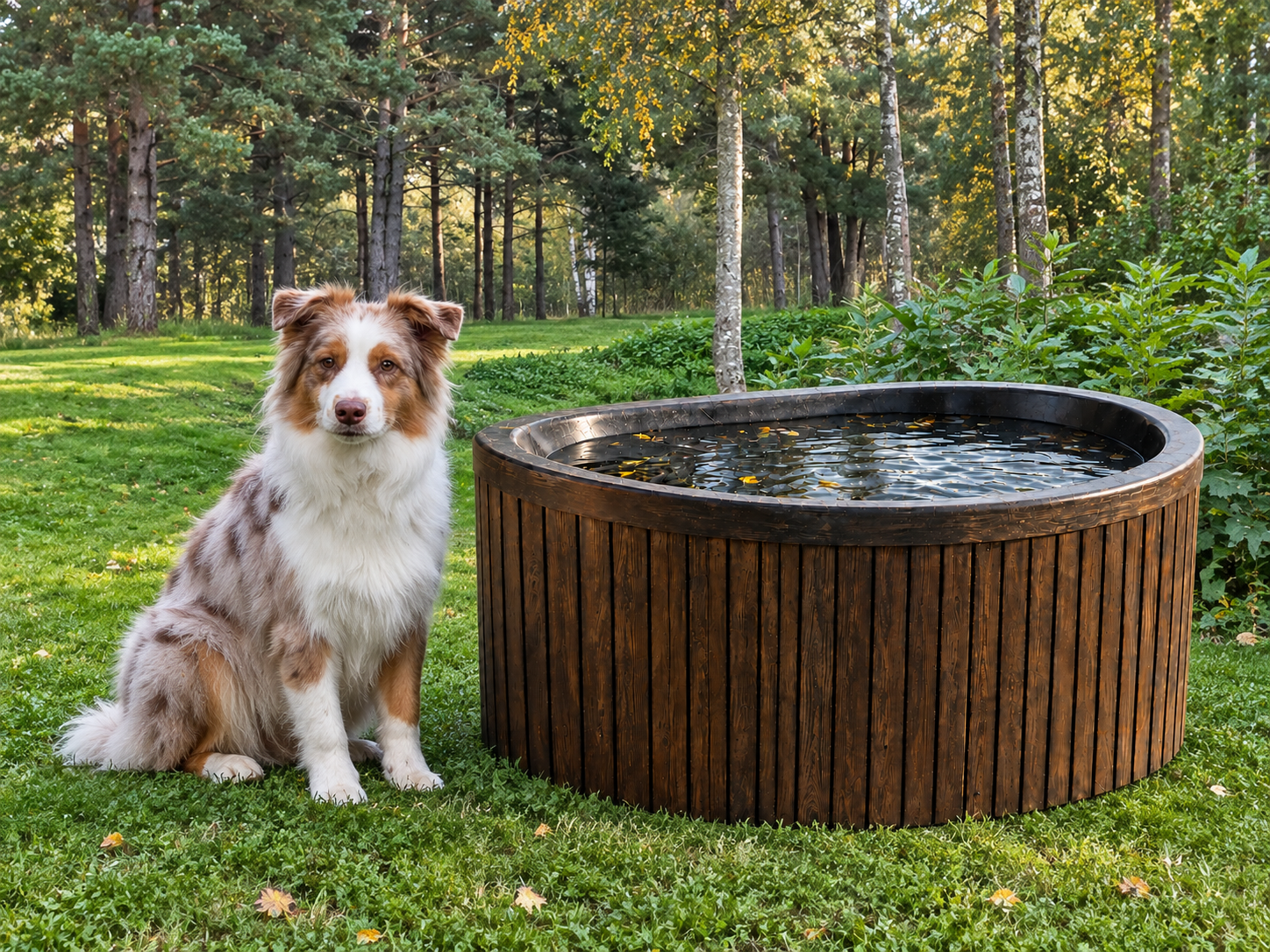
In Estonia, sauna is less about endurance than rhythm: warmth, fresh air or cool water, rest and conversation. A cold plunge can become a natural part of that rhythm, but it is never a requirement. A cool shower or a few quiet minutes outdoors can complete a sauna round just as well.
When sauna and cold plunge are planned together, the experience becomes easy to repeat at home. The path is short, the surfaces are safe under wet feet, and there is always a place to sit, breathe and rehydrate between rounds.
Why Sauna and Cold Plunge Work Well Together
The sauna offers warmth and a quiet space to pause. Cooling afterward – air, shower or immersion – marks the end of a round. People like the contrast. That preference is not the same thing as a proven medical protocol. Evidence for specific health outcomes from cold immersion is mixed, and major heart organizations have been cautious about benefit claims.
Keep the choice personal. Some evenings call for a cool shower and a seat outdoors; others may include a plunge. The cold-water part should remain optional.
The Nordic Rhythm: Heat, Cool and Rest
In Estonia, sauna follows a natural rhythm: time in the hot room, fresh air or cool water, a quiet pause, and another round only if it still feels good. Conversation and silence both belong. The aim is not a personal-best temperature. Read more about traditional Finnish saunas and their place in a home setting.
A useful home version looks like this – as an example, not a prescription:
- Drink water. Skip alcohol.
- Sit in the sauna only as long as you feel well.
- Step out. Breathe. Let the first wave of heat leave.
- Cool however you prefer: air, shower or a brief plunge with the head above water if you are new to it.
- Sit. Wrap up if you are shivering hard. Drink water again.
- Return to the sauna only if you still feel steady.
Stop at any point if you feel faint, chest discomfort, confusion or unusual shortness of breath. Get help rather than “pushing through.”
Cold Plunge vs. Fresh Air or a Cool Shower
Air and a shower are enough for many evenings. Immersion is a stronger stimulus. It hits more skin at once and can trigger a gasp and a jump in heart rate and blood pressure – the cold shock response described in the physiology literature and summarized for the public by the American Heart Association.
If you are new, practice cooling with air or a shower first. If you use the plunge, enter slowly. Keep your mouth clear of the water on the first breath.
Designing a Backyard Sauna and Cold Plunge Area
Think of three rooms without walls: the hot room, the cold water and the bench in between. Lighting should show edges. The floor should not be glossy. Robes need a hook. The neighbor’s sightline should be considered if you want to use the space in a towel. See our California outdoor cold plunge planning guide.
Plan the sauna and plunge as parts of one setting, with coordinated materials, clear walking routes and room to rest.
The Best Distance Between Sauna and Plunge
Close enough that you do not wander through the kitchen. Far enough that the sauna threshold does not stay wet. A few careful steps and a place to sit is the usual answer. Measure your own stride with wet feet in mind.
Use a lockable cover or barrier, supervise children continuously, and ask the local authority whether pool or spa access rules apply to the installation.
Safe, Slip-Resistant Movement Between Both
Texture underfoot. A modest grade. No hidden hose. A grab point at the tub. Night lighting that does not glare off the water. These details help reduce slip and trip risks around wet surfaces.
A Gentle Example Ritual for Beginners
- Water first.
- A shorter sauna round than you think you need.
- Out. Sit. Breathe.
- Optional plunge: enter gradually with your face and airway clear. There is no universal safe duration; leave immediately if breathing does not settle or if you feel dizzy, numb, confused, unusually short of breath or have chest discomfort.
- Out immediately if you feel unwell.
- Rest before deciding whether to continue.
- Another sauna round only if the first one felt easy.
There is no prize for colder or longer.
Rest, Breathing and Hydration
Rest gives breathing and balance time to settle before another round. Keep your face and airway out of the water. If breathing is uncontrolled, exit rather than trying to endure it. Keep drinking water available.
Creating an ecosh Pop-up Experience at Home
Start with how you want to spend an evening, then choose the equipment around it. For a quiet solo session, put a towel and drinking water within easy reach of the rest seat. For time with friends, give people somewhere comfortable to sit outside the sauna without crowding the plunge entry.
ecosh brings an Estonian sauna perspective to its California offering. You can compare the sauna layouts, explore the cold plunge or read about the guided ecosh Pop-up Experience. Ask us about current availability before planning a visit or event.
When Cold Immersion May Not Be Appropriate
Sudden cold water can cause an involuntary gasp and extra work for the heart. The American Heart Association and clinicians writing for Harvard Health have warned that people with cardiovascular disease, rhythm problems or circulation disorders should be especially careful, and that benefit research is thinner than social media suggests.
Ask a qualified clinician before cold immersion if you have cardiovascular or circulatory disease, an arrhythmia or blood-pressure concern; are pregnant; take medication that can affect heart rate, blood pressure, alertness or temperature response; or have been advised to avoid temperature extremes.
Do not cold-plunge alone, especially after sauna. Have a capable adult nearby, keep the exit unobstructed, avoid alcohol and never stay in to prove a point.
Common Mistakes
- Treating the plunge as mandatory
- Going from peak heat straight under the water without a pause
- Holding the head under on the first exposure
- Chasing a stopwatch
- Skipping the rest bench
- Building a beautiful pad that turns into a slipway at night
- Copying someone else’s temperature
Final Perspective
Build the sauna first in your mind, then the walk, then the water. Keep the cold optional. Keep the medical questions with a clinician. If the yard is arranged well, the ritual is quiet enough to keep.
If you are building both pieces at once, commission the path as a real drawing, even a simple one: door swing, bench, tub rim height, outdoor faucet, outlet, drain. Most regrets in these yards are not about wood species. They are about a step that was never measured.
Create your own Nordic heat-and-cold ritual
Explore ecosh Sauna and ecosh Cold Plunge to plan your home setting.
Frequently asked questions
Is a cold plunge required after sauna?
No. Air and a cool shower are legitimate endings to a round.
What order should I use?
A common pattern is heat, optional cooling and then rest; it is not a medical protocol. Do not enter cold water if you already feel dizzy or unwell.
How long should I rest between rounds?
Until breathing and balance feel ordinary again. For some that is a few minutes. Do not schedule it like an interval workout unless a clinician has cleared that idea.
How do beginners stay safer?
Go slowly, avoid prolonged exposure, keep your face and airway clear of the water, avoid alcohol, and have someone nearby.
Is a shower as good as a plunge?
A shower is a milder cool-down and a good default. “As good” depends on what you wanted. Choose the form of cooling that suits your circumstances and any clinical advice you have received.
What should I drink?
Water. Rehydrate. Skip alcohol around heat and cold.
Who should seek medical advice first?
Anyone with heart, blood-pressure, rhythm, pregnancy, medication or circulation concerns, and anyone unsure. When in doubt, seek medical advice before starting.
Sources and further reading
- American Heart Association News, “You’re not a polar bear: The plunge into cold water comes with risks,” Dec. 9, 2022. Read the source
- Harvard Health Publishing, “Cold plunges: Healthy or harmful for your heart?” June 1, 2025. Read the source
- Knechtle et al., “Cold Water Swimming–Benefits and Risks: A Narrative Review,” International Journal of Environmental Research and Public Health, 2020. Read the source